F
irstly, I want to apologize to my blog (which I paid for!) for neglecting it over the past three months. Life has been busy, and I’ve been deeply involved in organizing a book club for the Women’s Liberty Group, focused on socialist feminist readings. This experience has helped me build the confidence I needed to engage in community work, but now I’m ready to return to writing. Writing is how I express my thoughts, explore new ideas, and hopefully spark meaningful conversations.
For a while, I’ve been trying to finish my series on “Unwell Women.” One of the posts I’ve been working on is nearly complete, but it ended up being longer than expected. So, I’ve decided to split it into separate pieces. This post will focus specifically on contraception.
I’ll admit, I was hesitant to write about this topic. My intention is not to offend anyone or to suggest that contraception should be banned—far from it. The creation of the Pill and other forms of contraception liberated many women, and for countless people, contraception has been life-changing in the best way. However, this post aims to foster a discussion about the side effects and challenges that can come with contraceptives like the Pill, IUDs, and injections. Despite their benefits, these methods often come with serious side effects, and the medical community seems to place the burden of responsibility solely on women and people with wombs.
Additionally, I want to explore the troubling history behind these medical breakthroughs, particularly how they were often achieved at the expense of women of colour. I think that would be a topic for the second part of this post. I want to briefly touch on this when uncovering the unsettling truth behind the invention of the Pill as it highlights the extent to which resources are invested in inventing a method of contraception for women, while contraception for men is still a very much unheard subject.
Understanding Contraception: Women’s Responsibility, Side Effects, and Pain
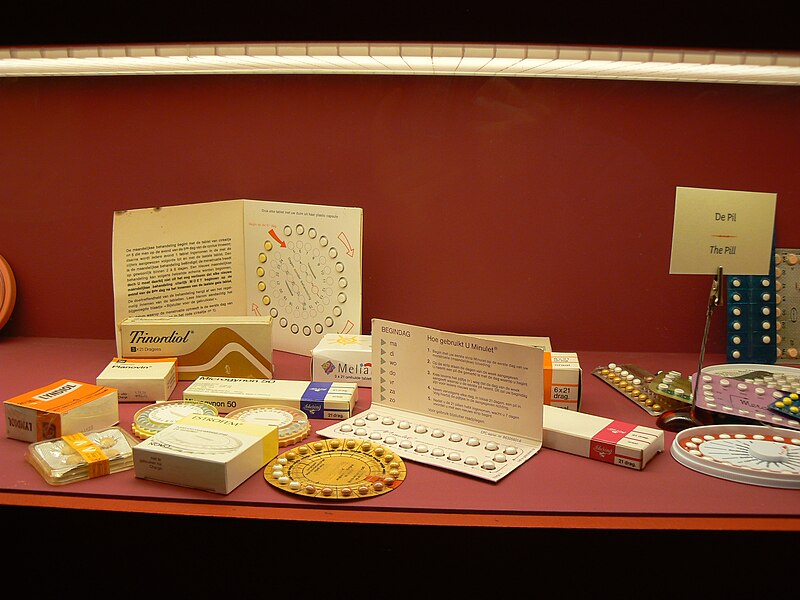
The introduction of the Pill marked a significant milestone in women’s lives. Its development and widespread availability during the 1960s and 1970s empowered women to take control of their reproductive choices. This revolutionary advancement challenged societal norms, giving women the autonomy to decide when, how many, and if they wanted children. It reshaped the perception of sex, liberating women from the expectation of marital obligation and allowing them to engage in sexual activity for pleasure without the fear of unwanted pregnancy and social stigma.
As a staunch feminist, one might expect me to champion the Pill as a symbol of women’s empowerment. While I acknowledge its role in sexual liberation, which can facilitate women’s access to education, social advancement, and financial security, I also recognise it as a barrier to women’s liberation. The Pill, along with other contraceptive methods like IUDs and hormonal injections, can inadvertently reinforce the notion that it is solely a woman’s responsibility to manage contraception and its associated risks.
The extensive side effects of hormonal contraception further highlight this imbalance. As seen in viral TikTok trends where women share the long list of side effects accompanying contraceptive pills, such as bleeding, headaches, nausea, and changes to skin, it becomes apparent that women bear the burden of these consequences. Some women even humorously present the lengthy list ‘which can be used a blanket’ to their partners, highlighting the disparity in responsibility for contraception.
This disparity which I believe raises questions about gender equality and the equitable distribution of reproductive responsibilities and risks. Ultimately, it falls upon women and people with wombs to ensure that neither they nor their partners face the prospect of an unwanted pregnancy. While men do have the option to use condoms or undergo a vasectomy, the reality is that only a minority opt for the latter, despite it being a reversible procedure. Condom usage is more common among single men, but its prevalence tends to decrease in long-term relationships. Additionally, women often encounter resistance from men who express reluctance to use condoms.
I think TikTok and Instagram have been invaluable platforms for highlighting the disparity in contraceptive responsibility. Recently, I came across a Washington Post article featuring women’s TikToks documenting the procedure of implanting an IUD, often without adequate pain relief from clinicians (Bever 2024). A quick Google search reveals that this gynecological procedure is commonly downplayed, with pain described as “little cramping” and the process supposedly lasting no more than a few minutes. This description trivializes the fact that such cramping can be excruciating. Most research simply states that it’s normal to feel “lightheaded afterward.” It’s worth wondering if men were responsible for contraception, would they tolerate a procedure involving invasive prodding and subsequent disorientation? It’s a question worth pondering.
Unveiling the Dark Legacy of Contraceptive Development
Now I want to move to the history of the invention of contraception itself including the Pill and even gynaecological testing which is itself stained with coercion and violence itself in the backdrop of white supremacy and misogynoir.
The history of contraception, including the Pill and gynaecological testing, is marred by coercion and violence, set against a backdrop of white supremacy and misogynoir. James Marion Sims, often called the “father of modern gynaecology,” conducted his work on a plantation in Alabama, where half of the population was enslaved. He used Black women as subjects for his experiments without any anaesthesia. These perfected procedures would then benefit white women, who were, of course, given anaesthetics, as they were considered more fragile and delicate. In contrast, the medical community presumed that Black women could tolerate immense pain, perpetuating a harmful and racist stereotype.
The invention of the Pill also took place against the backdrop of racial exploitation, with Puerto Rican women often serving as test subjects for this feminist revolution. Katherine Dexter McCormick, a woman activist and philanthropist, was a key driver in developing the first oral contraceptive. She funded the pharmaceutical trials that led to the creation of Enovid. In a personal letter to Margaret Sanger (women which we will talk about in the next post) , she referred to the trial as a need for the “cage of ovulating females to experiment on” (Cleghorn 2021)
The Enovid trial, which began in 1956, tested the first contraceptive pill (a combination of oestrogen and progesterone). The women involved were told that this medicine “would keep them from having children they could not afford.” These women came from impoverished backgrounds with little to no education, and many were illiterate. Vulnerable and desperate to escape the cycle of poverty, they saw this as their only option. At the time, sterilization was the primary method of birth control, and approximately one-third of Puerto Rican women were sterilized—many involuntarily—under U.S. government policies led by Clarence Gamble, who believed in reducing the so-called “unfit population” to make way for a more desirable one (Blakemore 2023).
What these women were not told were the potential side effects or that they were essentially being used as guinea pigs. According to Cleghorn’s research, 17% of the women experienced side effects such as nausea, gastrointestinal problems, bleeding, dizziness, vomiting, and headaches. These side effects were dismissed by Gregory Pincus, the leading co-inventor of the Pill, who referred to the complaints as the “emotional super activity of the Puerto Rican women.”
Conclusion
I don’t want to sound repetitive, but it’s important to acknowledge again: contraception, including the Pill, has brought significant benefits and improved many lives. However, as a feminist, I feel it’s crucial to question why the burden of family planning continues to fall almost exclusively on women and people with wombs. True liberation in reproductive health means sharing this responsibility more equally. This burden is convenient for men, yet many of the same men will fiercely oppose reproductive freedoms. The system is frustratingly contradictory—designed to control women whenever it suits patriarchal interests, which is a hallmark of patriarchal capitalism.
The Envoid trial is a stark example of how Black and brown bodies have been exploited in the name of gynecological progress. It also connects to my next discussion on reproductive rights and eugenics—topics often hushed, especially within white middle-class feminist circles. This history shows how the reproductive health movement can be weaponized to control the bodily autonomy of women who are considered ‘inconvenient,’ ‘unfit,’ or ‘undesirable’ by society. Women and people with wombs are under constant attack, even from those claiming to advocate for true bodily liberation. This is something I will delve into further in my next post.

Hi, I’m Dominika, the sole author of this article. I created this space to connect my ideas and express my political and social commentary in the vast digital void. Here, my consciousness speaks through.