F
irstly I would like to apologise for the delay in posting again on this platform. I had been feeling extremely sick past two weeks, and I am still in the post- infection state. This article maybe delayed but it’s still incredibly relevant as the fight for full reproductive justice is not over.
This post is fully published on Substack. Please read a full piece of this article. Please head of to my Substack.
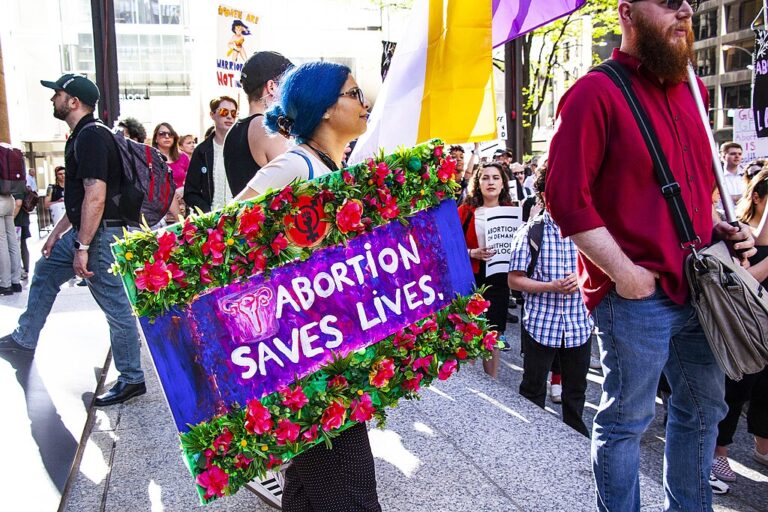
Abortion in the UK has been criminalised under the NC1 amendment proposed by MP Tonia Antoniazzi. The previous two posts on my blog dealt with abortion rights, and now more than ever its important to look at the realities of what happens when abortion is criminalised, whether that is through reading Happening by Annie Ernaux, or looking at the USA, where Adriana Smith had been forced to being incubator despite being brain dead, and delivered a foetus after being forcibly kept on life supporting machines. There are a lot stories you can turn to.
Nevertheless, UK achieved in its way win, but radical enough as Stella Creasy stated in her Guardian Article. To stay vigilant is not enough. We need continue our fights as anti-abortion movements and anti-gender mobilisation sits at the very heart of the new wave far right.
Reproductive Rights in the UK: A Partial Victory, A Long Road Ahead
There’s been a significant development in the UK regarding reproductive rights. As some of you may know, the NC1 amendment, proposed by MP Tonia Antoniazzi, recently passed—meaning that abortion is no longer a criminal offence for women, even when sought after the 24-week limit. On the surface, this seems like a major victory for reproductive justice. And in some ways, it is.
But let’s not get ahead of ourselves. The fight is far from over.
While the amendment decriminalises abortion for women, it still allows for the criminal prosecution of medical professionals or partners who assist in accessing abortion care outside of the legal timeframe. It also leaves intact outdated and restrictive laws, such as the requirement for approval from two doctors and legal barriers to telemedicine abortion—a particularly concerning omission, especially considering the possibility of future pandemics or healthcare crises.
What’s more disappointing is that Stella Creasy’s proposed amendment—which could have gone much further—wasn’t even debated in Parliament.
As Creasy rightly pointed out in her Guardian piece (which I highly recommend reading), her amendment would have delivered “protection to all those involved in ensuring that women can access safe and legal abortions.” It also would have embedded reproductive choice within a human rights framework, provided stronger protections for buffer zones around clinics, and made a broader, more lasting impact (Creasy 2025).
In her article, Creasy expressed understandable frustration with the cautiousness of some healthcare organisations like BPAS, which she argued were too timid to publicly support her proposal. Instead of embracing bold, structural change, many opted for the safety of incrementalism—playing it safe when the far right is on the rise, emboldened by U.S. court rulings and mainstreaming misogyny online and off (Creasy 2025).
This post aims to look at why that caution exists, and why we cannot afford to mirror it. Drawing on the investigative work of Sian Norris, particularly her book Bodies Under Siege, and her research on online radicalisation via platforms like Pink Pilled: Women and the Far Right, I want to explore how the anti-abortion movement is not a fringe concern—but a heavily funded, transnational campaign to erode bodily autonomy, often led and upheld by women themselves. Therefore, we need to support Creasy amendment that would enshrine the abortion rights with the UK, so they do not become, withered with the tectonic changes that far right brings to the table.
A Well-Financed Machine: The Anti-Abortion Movement.
The scale and financing of the global anti-abortion movement is both staggering and chilling. As journalist Sian Norris documents in Bodies Under Siege, this movement is neither fringe nor spontaneous. Between 2009 and 2018, nearly $702 million was channelled into anti-gender and anti-abortion initiatives worldwide—$437 million of that from Europe alone (Capraro 2024, Norris 2023).
So who’s behind this funding? While American evangelicals and Russian disinformation networks are major players, a less obvious cohort is just as influential: European aristocrats. These are descendants of ruling dynasties like the Habsburgs and German Kaisers, who are now pouring money into efforts to restore a so-called “natural order”—a mythologised past of rigid hierarchies, traditional gender roles, and church dominance (Norris 2023).
Norris argues that these aristocrats seek to re-establish a divine patriarchal structure, one in which their historical authority was never questioned. Their investment in anti-gender and anti-abortion campaigns is not merely about moral opposition to reproductive rights or LGBTQ+ identities—it’s about reasserting social control, defending inherited privilege, and resisting democratic progress (Norris 2023).
At its ideological core, this movement overlaps heavily with fascism. It feeds a fantasy of a “golden age” upheld by biology, religion, and obedience. After World War I, fascist regimes often gave refuge to aristocratic families fearful of socialism, feminism, and secularism. Today, the ideological descendants of those families fund organisations like Yes to Life, founded by the late Countess of Westphalia, whose mission is to defend “traditional values” (Norris 2023).
Though the Countess died in 2016, her financial legacy endures—and so does its impact on reproductive rights. Her links to Catholicism were extensive: she was the grandniece of Clemens August Graf von Galen, a bishop beatified by Pope John Paul II, who also personally knighted her. John Paul II played a crucial role in popularising the concept of “gender ideology”—a term now weaponised by reactionary forces to discredit feminism and LGBTQ+ rights. His theology presented biological sex as immutable and “complementary,” laying the foundation for today’s anti-gender crusade (Patternottee and Kuhar 2017).
This isn’t just about shadowy aristocrats, either. Norris also exposes how governments have enabled this movement—often unknowingly. Take the UK’s so-called “tampon tax,” for instance. Before its abolition in 2021, portions of its revenue were quietly directed to anti-abortion organisations like the Charity Life. Yes, taxpayer money funding groups actively undermining reproductive autonomy (Norris 2023, Quinn 2017)).
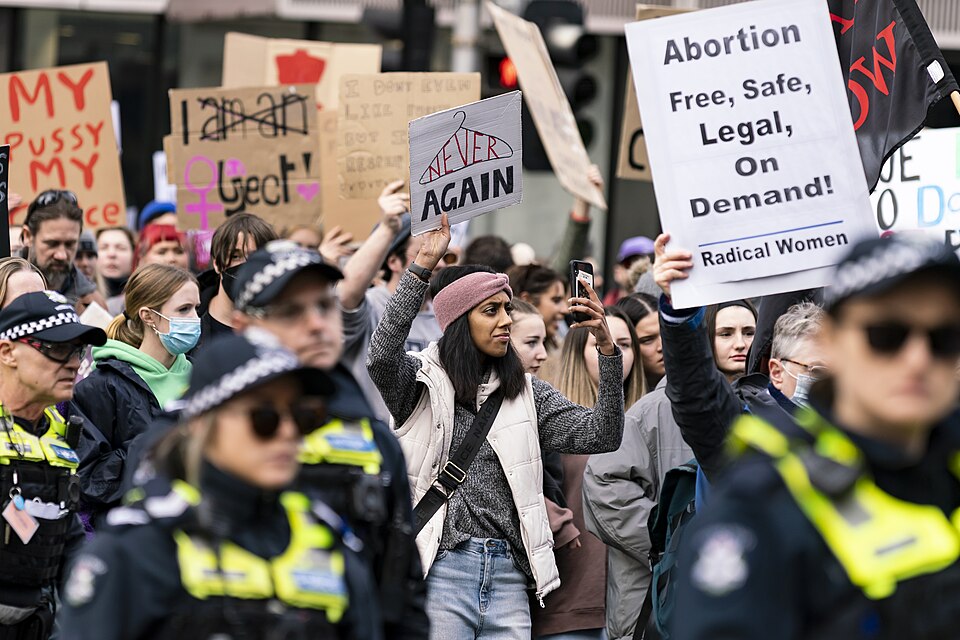
And then there’s U.S. influence. From 2020 to 2022, the Society for the Protection of Unborn Children (SPUC) received £72,000 from American donors, with £1,000–£1,500 spent on individual Facebook ads alone (Galer 2022). These groups rely heavily on digital campaigning, mirroring the online tactics of the far right. Activist networks I’ve been part of have tracked this spending in real-time during the recent campaign to support the Creasy Amendment for abortion decriminalisation.
And the scale is growing. The Alliance Defending Freedom, a U.S.-based Christian fundamentalist group, donated £324,000 to its UK branch, ADF International, and spent £1 million in Scotland alone (Walker 2025). These are not marginal sums. This is a well-funded, international movement driven by ideology and backed by wealth.
All of this leaves us with an urgent question: How can we fight for reproductive justice without confronting the vast power structures that sustain its opposition?

Hi, I’m Dominika, the sole author of this article. I created this space to connect my ideas and express my political and social commentary in the vast digital void. Here, my consciousness speaks through.