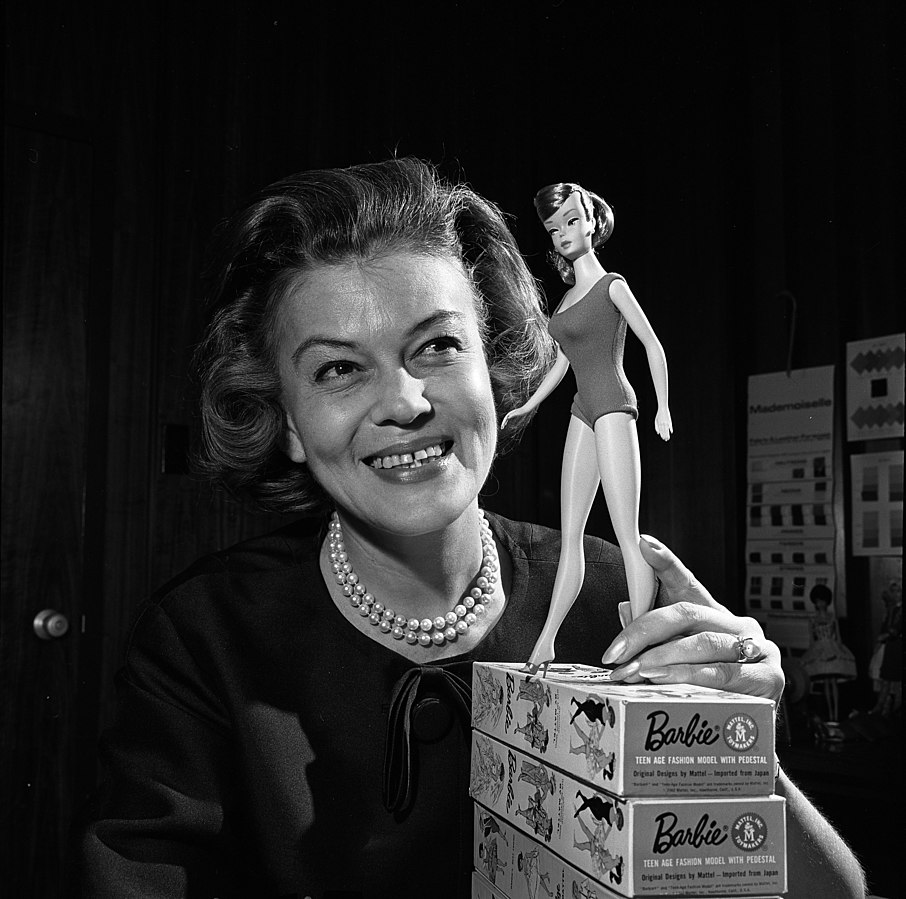
Warning: Spoiler Alert– contains Barbie film plots
Introduction: Navigating the Gender Divide
I
approached the Barbie film with a mixture of curiosity and reluctance. The overwhelming hype surrounding it left me hesitant to join the trend. It seemed like Barbie had already become a sensation before its release. Memes, the excitement shared on social media – it was all too much. The sheer number of people saying ‘YES’ just made me want to shout ‘NO.’
Honestly, I didn’t want to watch it. Whenever something gets excessively hyped, my interest wanes, and I find myself unwilling to jump on the bandwagon.
So, as someone who tries to detach from mainstream phenomena, I found myself more excited about another film, “Oppenheimer.”
Of course, there was a noticeable gendered and binary divide between the releases of these two highly anticipated films. One was hyper masculine, revolving around the inventor of the nuclear weapon, the ultimate instrument of destruction. The other was Barbie, a doll associated with girls and hyper-feminine traits.
Part of me didn’t want to see Barbie because of my deeply ingrained internalized misogyny. Yes, I admit it, because I’m acutely aware of it and actively working to overcome it. But there are days when even I become a victim of its manipulative grasp. I didn’t want to watch Barbie because I didn’t want to be associated with what society often devalues – hyperfeminine traits. Hyper femininity isn’t seen as powerful or influential. Throughout my childhood and teenage years, it was ridiculed by my classmates, society, entertainment, and even friends. So, why would I want to embrace that?
Seeing Myself in Sasha: A Beauvoirian Perspective
I saw a true reflection of myself in Sasha’s character when she encountered Barbie at school. Sasha’s criticism of Barbie, labelling her as a symbol of ‘consumerism’ and unrealistic ‘beauty standards’ that made women feel bad about themselves and even calling her ‘fascist,’ resonated with me.
In conclusion, this scene confirmed that I am an angsty twenty-something, but it goes deeper than that. I’m an angry young woman, still grappling with some internalized misogyny, evident even in my seemingly trivial choices, like picking a weekend movie.
I couldn’t help but recall Simone de Beauvoir’s words from ‘The Second Sex,’ where she stated that ‘you are not born a woman; you become one.’ The life of women could almost be represented by a girl’s childhood play toy, the doll. This beloved childhood toy mirrors the life of women – a realm of immanence, a static entity whose existence is often relegated to that of a passive accessory. In simpler terms, women are frequently treated as objects to be played with rather than active agents with subjectivity. Seeing this film, would be a betrayal to Beauvoir to me.
The final scene in the Barbie movie, featuring Barbie herself and the doll’s maker, served as a powerful testament to how I had jumped to conclusions about the film. Barbie expressed, ‘I want to be the one imagining, and I don’t want to be an idea anymore.’
I think the filmmakers were consciously aware of Beauvoir’s writings. This is definitely evident as the film delves into philosophical existentialism, with Beauvoir’s ideas playing a crucial role in understanding the constructs of gender, existence, and choices. This scene prompted me to recall Beauvoir’s quote, which I also referenced in my master’s dissertation.
“A woman is an eminently poetic reality since man projects onto her everything he is not resolved to be.” – Simone de Beauvoir, ‘The Second Sex.’
Rationality only for men, otherwise you are just emotional
The Barbie film validated my anger, affirming its legitimacy. In contrast, the fury expressed by many men, some even resorting to the extreme act of burning a Barbie doll (yes, that included Ben Shapiro), left me convinced that for real change to occur in our existing power structures, men must align themselves with feminism. Frankly, it’s not merely a need for change in these structures; we require their complete eradication. Their foundations are not only flawed but also profoundly harmful to society.
Furthermore, the fact that men like Shapiro resorted to burning a doll highlights two significant aspects:
- Men are permitted to express emotional leanings when voicing political and societal critiques without being labelled ’emotional.’ Instead, they are often hailed as righteous and intelligent mavericks resisting the encroachment of a ‘woke-snowflake’ world out to condemn them.
- The act of burning a doll in response to a film that dared to satirize men and their male-centric world is both profoundly emotional and eerily reminiscent of historical traditions like the witch burnings, where women who defied societal expectations set by men were targeted.
It’s easier to attack those who question your excess power and privilege than to engage in introspection regarding your conscious or unconscious complicity in perpetuating the oppression of those who don’t fit the mould of the cis white man.
Is there something inherently wrong with the world as we’ve designed it? Well, power carries the weight of responsibility, and it can also lead to corruption and irrational defensiveness. This phenomenon arises from the fear of being seen as the ‘bad guy,’ especially since men are raised from childhood to embody the role of the righteous character.
God forbid they admit their failures or acknowledge that they’ve become pawns or, worse yet, victims of a system that rewards them for merely existing while simultaneously discouraging any questioning of it.
Men are reliant on this system, not because it defines them, but because it validates their experiences; it is, in essence, their world. However, I firmly believe that this world doesn’t genuinely reflect their actual wants and needs. Once again, the system has a tendency to shape what is considered men’s desires and wants.
‘Facts don’t have feelings’ unless it’s a woman telling them
Ben Shapiro’s criticism of Barbie doesn’t come as a surprise to me. Firstly, labelling it a left-leaning propaganda film is ironic, considering his views could be characterized as right-wing conservative. Naturally, he wouldn’t refer to his expressions as propaganda but rather as rational and fact-based opinions.
This stems from the ‘point of viewlessness’ of the white male perspective, which has been ingrained as objective and rational—a reflection of white male identity and ideological opinion (Perez 2017).
Furthermore, in his eloquent criticism, he stated: ‘The basic premise of the film, politically speaking, is that men and women are on two sides of the divide, and they hate each other.’
I’m not sure if Shapiro also noticed, but this divide already exists. We live in a binary world where men and boys take precedence in public spaces and policies, holding positions of power.
I’m also uncertain if Shapiro paid attention in history class, but who created this divide in the first place? It certainly wasn’t a group of economically independent and politically influential women sitting in their own homes, with husbands handling household chores and childcare.
Returning to the point of this divide, I believe individuals like Shapiro or Piers Morgan, and others like them, see something that reflects their complicity in perpetuating hostility towards women.
Their criticism is an expression of profound discomfort. The Barbie film presents a world where power structures are inverted. Witnessing life from a male perspective in such a world makes them uneasy and apprehensive that one day such inverted power structures could become our reality. Thus, returning to my initial statement, men like them either don’t want to see equality or fear that with equality, they’d need to redefine themselves in a way that doesn’t entail wielding power and dominance over others.
As Simone Beauvoir wrote, ‘he is seeking in her the myth of his virility, of his sovereignty, of his immediate reality. But he is himself the slave of his double: what an effort to build up an image in which he is always in danger!'(The Second Sex)
Hatred beyond Violence
The other topic that this film made me question is how we define hatred and violence, something that has been on my mind for a while now.
We often think of hatred and violence as something active, something that is physical and immediate.
As Sasha pointed out, men hate women, and women, at times, harbour animosity towards other women; that’s perhaps the only commonality we share, and frankly, she’s not entirely wrong.
Indeed, hatred and violence can be physical, and we are told that such is considered as abnormal – and normalized as a defection from the norm – although the data showcases that actually such ‘abnormality’ is not really abnormal but rather common.
Statistics reveal that one in three women experiences physical or sexual intimate partner violence or non-partner sexual violence in their lives. This hatred can also manifest in public policies, job discrimination, and medical dismissiveness.
Globally, it is estimated that 736 million women, equating to one in three, have been subjected to physical and/or sexual intimate partner violence, non-partner sexual violence, or both, at least once in their lives. This statistic, however, doesn’t even include incidents of sexual harassment (The World Health Organisation)
However, hatred and violence extend beyond mere physicality; they permeate society in various subtle ways.
This hatred and disdain for women can also be expressed through public policies themselves, such as urban planning that overlooks women’s safety and needs, or the fact that many jobs traditionally deemed ‘feminine’ are low-paid and not a priority for government investments.
This deep-seated animosity can also be witnessed in the medical field, where the pain and suffering of women are often ridiculed and dismissed. Women are told by medical professionals, ‘Don’t be such a drama queen,’ or ‘It’s just period pain; get over it.’
In conclusion, in the wise and, of course, rational words of Shapiro, ‘facts don’t have feelings.’ Data is here to prove these points, but shedding light on these issues often enrages a significant number of men, perhaps because it forces them to confront their complicity.
I don’t know why, but writing this reminds me of a charity post during the pandemic. It highlighted that many women and menstruating individuals lacked access to sanitary products. They devised a solution to deliver these essential products to those in need. To me, this was more than altruism; it was recognition of a need that is often overlooked and, sadly, sometimes even shamed.
Reading through the comments section, I noticed many comments, primarily from men. The first comment I came across went something like, ‘Don’t they have anything else to spend money on? How did women manage without pads and tampons before the 20th century? Seriously, get over it.’
Once again, women’s pain and discomfort during menstruation aren’t just ridiculed; they’re sometimes bizarrely encouraged. Why women should have a ‘luxury’ or some sort of humane comfort in the 21st century when they are bleeding for 4 to 7 days?
So, aren’t these examples above expressions of hatred? A form of active dislike?
So, I cannot help but draw parallels between the above example and the expressions made by men criticising the film; ‘Please stop talking, nobody cares, and it’s offensive that you dare to even point it out.’
Yes, it’s unfortunate, but some women harbour animosity towards other women. Regrettably, many of the women who break through the ‘glass ceilings’ often perpetuate patriarchal norms and prioritize masculine aspects.
Thatcher serves as one example. While she was the first female Prime Minister in the UK, her policies didn’t support marginalized communities. So, does it really matter if she occupied a position that was traditionally reserved for men for centuries if she didn’t bring meaningful change for people living in poverty, women, and other marginalised communities?
Women and other marginalized communities should indeed have access to power, but we must redefine the praise given to shattering the ‘glass ceiling.’
Concluding- Men’s fear and prime discomfort
The film has been labelled as ‘anti-men’ by certain critics, many of whom are self-proclaimed intellectuals, and likely predominantly male such as Shapiro and Piers Morgan.
Men have historically and continue to oppress women, committing acts of violence such as enslavement, murder, rape, and assault, while also denying them the right to vote, a voice, and agency. Yet, when a film satirizes this behaviour, we are expected to tiptoe around the possibility of hurting men’s feelings?
Women’s lives are often characterized by the need to navigate carefully to avoid offending men’s sensibilities. If this isn’t another demonstration of their power and privilege, I don’t know what is. For me, men’s denial of women’s and marginalised groups struggles within a system designed to favour them is a form of institutionalized gaslighting.
Women shouldn’t have to justify their anger or existence, just as they shouldn’t have to explain the fundamental message of the Barbie film.
I’ve seen numerous posts on Instagram that clarify the film’s message: it’s not anti-men, it’s anti-patriarchy, recognizing that everyone, including men, can be victims of it. I’m not attacking those who make these posts, but I’m simply exhausted from repeatedly defending and explaining my anger.
It’s akin to when women describe experiencing violence and mistreatment by men, and in response, we say ‘I hate men.’ Suddenly, a group of men jumps in, saying, ‘Well, I’m not like that, so stop generalizing.’
If the mere expression of speech offends you, perhaps you should reflect on what you’re defending – your own image – while simultaneously denying the lived experiences of not only me but almost every woman and marginalized group.
This happens because men’s positive image often takes precedence over my fear of living in a world where male violence in all its forms is normalized within society’s very fabric and functions.
In the Spirit of de Beauvoir: Embracing Authenticity and Power Critique
I understand that this post is lengthy and perhaps a bit scattered, but it’s authentic, and this is precisely what Beauvoir would have wanted.
Authenticity and questioning the power structures are at the core of her philosophy, and I hope this post reflects that.
I’ve wrapped up my thoughts, but I’d love to hear your opinions on the film. What are your thoughts?

Hi, I’m Dominika, the sole author of this article. I created this space to connect my ideas and express my political and social commentary in the vast digital void. Here, my consciousness speaks through.