
Trigger Warning: this article mentions sexual violence
I
wrote this article a year ago Probably about a month or two after the war broke out. I still think it has relevance as the war initiated by Russia is still ongoing and human rights violations in Ukraine committed by Russian soldiers are constantly in the news.
The article also comes out after the International Criminal Court issued a warrant on the 17th of March 2023 to arrest Vladimir Putin. The warrant stated the allegation of Russia’s illegal deportation of Ukrainian children and teenagers to Russia’s so-called re-education camps. The aim of such tactics is obvious; Russification and the destruction of Ukrainian national identity (Council of Europe 2023)
The warrant also stated the Russian army’s deliberate attack on civilian infrastructure, which had been a common and daily tactic used by the Russian army. Just recently on Friday 28th of April 2023, Russia launched a missile strike on a residential building in the city of Uman, resulting in the killing of at least 23 people.
There has been a lot of discussion on whether Putin can be held accountable through international law for the ongoing invasion of Ukraine (February 2022) and the war crimes that are currently taking place.
What’s next?
Can Putin be held responsible?
Can Russian military generals be held accountable?
Can Russian authorities be punished accordingly?
These include the events that the international community witnessed in Mariupol – the bombing of maternity hospitals, theatres where civilians were hiding from bombing, and reports claiming that many Ukrainians had been captured by Russian soldiers and presumably sent to camps in far-away regions of Russia.
Also, the discovery of brutally murdered and tortured Ukraine men, women, and children in Buch, a town nearby Kyiv. The details are both horrific and unimaginable.
Many have called Putin a war criminal. With more discoveries to emerge, especially from the horrors which took place in Buch and Izium, many human rights lawyers and law experts have called for decisive actions. They are presented with irrefutable evidence that the Russian military has committed crimes against humanity. Many including the Ukrainian President, Volodymyr Zelensky, have labeled the atrocities a ‘genocide’.
There was already a successful trial of a 21-year-old Russian soldier who pleaded guilty in court in Kyiv on the 18th of May 2022 to killing an unarmed civilian.
However, the most pressing question is how to persecute the individual who initiated this war in the first place; Vladimir Putin.
Unfortunately, these answers are not straightforward. International organisations and laws are not always effective in holding a state and its leaders accountable due to the simple reality that nation-states are sovereign entities. This means that states are the most powerful actors in the international arena; nothing can be done against them if they resist.
Not to mention, a state is even more powerful when it resides in the security council of the United Nations (UN). This provides them the ability to veto any actions brought forward by the UN, including from the International Court of Justice – a body extension of the UN that deals with disputes between nation-states. It was only a month after the invasion; on the 7th of April 2022 that Russia was suspended from the UN Human Rights Council, by a two-thirds majority.
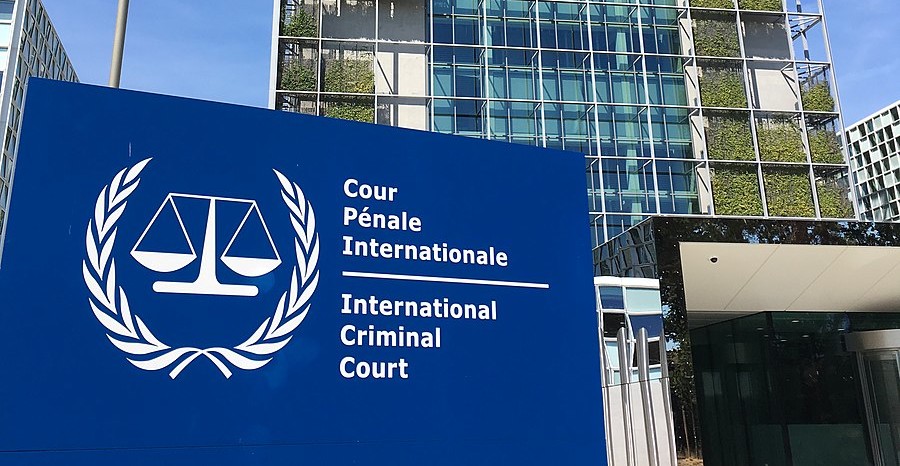
It is worth noting that there is another international organisation that specifically investigates crimes against humanity, genocide, and war crimes. This is the International Criminal Court (ICC). The organisation that issued a warrant for Putin’s arrest on the 17th of March 2023.
The precursors of special tribunals and the ICC itself were the infamous Nuremberg Trials (1945-1946) for Nazi collaborators. The modern-day tribunals of Yugoslavia and Rwanda (the 1990s) are also examples of how international law can hold individual state authorities accountable for war crimes.
However, the prosecutor for such a trial must include concrete evidence that Putin himself issued the order to target civilians. Including the bombing of hospitals, shelters, and humanitarian corridors. Or, that Putin had information about civilians being targeted and did nothing to prevent it.
As mentioned, the current priority for the investigation that accelerated the issue of the warrant is the deportation of Ukrainian children and teenagers to Russia, for its aim of Russification. According to the evidence gathered by Yale University and Conflict Observatory programme at least 6000 children from Ukraine are currently being held at the so-called Russian re-education camps.
The second case for the arrant was also a target of civilian infrastructure; necessary evidence is held by the US government. This in itself is another obstacle to obtaining justice for Ukraine. This is because the release of the evidence is being blocked by the U.S defense department due to the anxieties in establishing a precedent action that could also open a way for prosecuting American authorities as well (Simon 2023 New York Times)
The so-called ‘pin command responsibility’ is not the only issue. Russia, alongside other major powers (i.e., the USA and China) are not part of the ICC. In practice, Russia is outside the jurisdiction of the Court. Even if Russia ratified ICC jurisdiction, it would have to rely on Russia’s police to detain the individuals responsible for war crimes, which seems very unlikely.
The only other possibility is that the individuals responsible for current war crimes in Ukraine will flee to a country that is bound by ICC jurisdiction. But even that possibility seems bleak currently. Thus, possibly the only way for Putin to be charged in court is a change of regime in Russia. Even then, to say the least, the matter of charging Russia with committing war crimes and crimes against humanity could take years.
For example, it took 10 years for the former Liberian President, Charles Taylor, to be convicted for war crimes committed during the Sierra Leone Civil War (1991-2002). Similarly, it took many years for Radovan Karadžić and Ratko Mladić to be charged for their involvement in the genocide committed during the Yugoslav wars.
However, according to the prominent British human rights lawyer Philippe Sands, there is another possibility that the international law community could pursue. Sands proposes creating a special tribunal for Russia, shifting focus from ‘crimes against humanity’ to ‘crimes of aggression’, i.e. the unprovoked military invasion of a country.
Alongside Sands, other prominent politicians (such as former British Prime Ministers Gordon Brown and John Major) are currently launching a campaign for a special tribunal to take place under the institutionalisation of the so-called crime of aggression. Such a tribunal would thus investigate crimes of aggression by Russia.
In such a way, it would be much easier to persecute Russian authorities since ‘Every act, every attack, every bomb on a theatre with 1,000 people in it is a crime of aggression. I don’t want to let these people off the hook’ (Sands, UCL, March 2022).
Therefore, a crime of aggression would be the overreaching umbrella term that could allow for Russian authorities, including Putin, to be persecuted for waging an illegal war and crimes against humanity.
Currently, such an option is becoming more popular. With the unfolding of more evidence of crimes that have been committed in Ukraine, this option is believed to be an effective tool to prevent Russian authorities from escaping justice.

Hi, I’m Dominika, the sole author of this article. I created this space to connect my ideas and express my political and social commentary in the vast digital void. Here, my consciousness speaks through.















Everything is very open with a precise clarification of the challenges. It was really informative. Your website is useful. Thanks for sharing!
Usually I do not read article on blogs however I would like to say that this writeup very compelled me to take a look at and do it Your writing style has been amazed me Thank you very nice article