
C
apitalism, especially when looking at the gendered division of labour, is one of the few topics I feel truly passionate about. I got so passionate about it, that I kept writing and, before I knew it, I had six pages but no sense of direction. Just pure and semi-filtered anger spilled on the pages.
The unpaid housework and childcaring duties had been perceived for centuries as natural activities when in fact they constitute economic injustice, and our current economic system reflects this by labelling them as leisure activities (Waring 1985-2020)
However, the reality is much more complex than one established by the malestream, and the implication of such reality is much more far-reaching than simply reducing women to subordinate positions on the career ladder.
I believe that such gender division affects the quality of life of everyone and not just women. Critical lenses towards binary gender systems are essential and need to be taken into account in order to improve the current state. It is a state that is not beneficial for either party involved in society.
This post gives a mini background on the theory and on the Italian feminist movement that primarily focused on economic injustice by indicating the source of it- the undervaluation of housework and childcare.
The second post will talk more about how such treatment of this ‘private -sphere’ ricochets on the public spheres of industries such as teaching, nursing, and other works that are tied with care, emotional support, and femineity. This binary imposition of reducing reproduction (by that we mean housework and childcaring duties) to that non-monetary value; a private sphere that for centuries continues to be primarily taken care of by women, because of their biological predispositions.
The ‘Lotta Feminista’ and the 1970s
My critical approach to capitalism comes with a sense of admiration towards the Italian feminist movement.
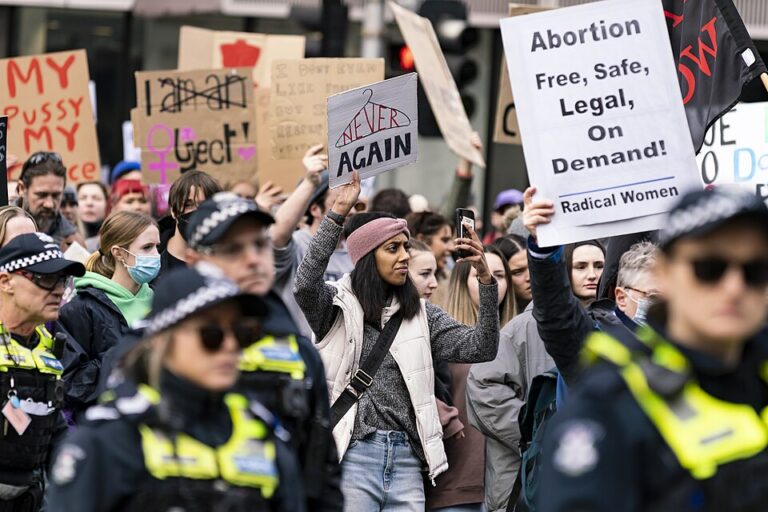
The Italian feminist movement during the second wave of feminism in the 1970s was unique. While the women’s rights movement emerged globally, in the Western hemisphere, with particular concern on reproductive rights, as their campaign focus. The Italian feminist movement went even further by drawing focus on the most undervalued sectors of the economy: housework and childcare. The Italian feminist movement’s campaign for recognition of this unpaid sphere initially emerged in Italy mainly because of the well-entrenched social construct of the so-called ‘angelo del focolare’ (angel of the house) in Italian society (Federici 2021)
This idea was becoming more challenged by the leftist movements that began emerging during the period of ‘years of lead’ in Italy in the 1960s. This topic’s discussion had also been catalysed by Mariarosa Dalla Costa who together with Selma James published the book in 1972 titled ‘Women and the Subversion of The Community.’ A book that I mention later on in the post.
They spoke of the unfairness of such work being undervalued and overlooked even among the leftist-Marxist intellectuals. Thus, the Italian feminist movement in the 1979s made a powerful statement not only to the ones who saw capitalism as a flawless system. They also confronted the Marxist leftists whose Weltanschauung was correspondingly ‘malestream’ dominated. This is because their fight for ‘fair wages’ did not embrace the unpaid work that was done outside the circuit of factory production.
Thus, by drawing focus on this undervalued sector, they simultaneously established a theoretical foundation from which arguably all other women’s issues originate.
Apart from mentioned before Dalla Costa& Selma, one such thinker is the prominent Italian Marxist feminist scholar (also known as my ultimate academic icon) Silvia Federici.
Her works such as ‘Caliban and the Witch’ and ‘Patriarchy of the Wage: Notes on Marx, Gender, and Feminism’ explicate the historical evolution of capitalist imposed binary realities, that subsequently reduced reproduction to a private sphere, and thus non-monetary value. She argues that such reduction was an essential prerequisite for the economy to make a profit. This prerequisite ricochets on the rights and autonomy of women in various aspects; reproductive rights and financial independence.
Interestingly, all three of these women formed a group called a ‘Lotta Feminista’ in Padua in 1972. This group’s primary organising principle was ‘Wages for Housework’ (Tortorci 2013)
Correspondingly, in 1972, these women also formed the International Wages for Housework Campaign after the women’s conference that took place in Manchester UK.
It was one of the first international grassroots movements where working-class perspectives were the priority. They emphasized a wage for housework both as an economic reimbursement and also a political tool to fight other battles that stem from the reality of this unpaid sector such as equal pay, child care, health care, and reproductive rights.
Federici and Dalla Costa& Selma indicated that capitalism and industrialisation have established the heteronormative ideal of a ‘nuclear family’. Under this concept, husbands are perceived as the ‘breadwinner’ and thus the paid labourer; whereas women are unpaid and dependent on their husband’s wages as ‘housewives’ (Federici 2021, Dalla Costa 1972). Such an ‘ideal’ family construct for capitalism is beneficial, as it allows for a cost-efficient supply of labour and consumers.
I was able to get a hold of this book at my university library. the book is short yet powerful as it opens a debate on the undervaluation of domestic labour. Selma and Dalla Costa propose that ‘social productivity’ that is generated primarily by women within the household is necessary work for capitalist production that is yet vapourised into non-existence as it is not physically visible, as the process of producing goods and services. (Dalla Costa 1972).
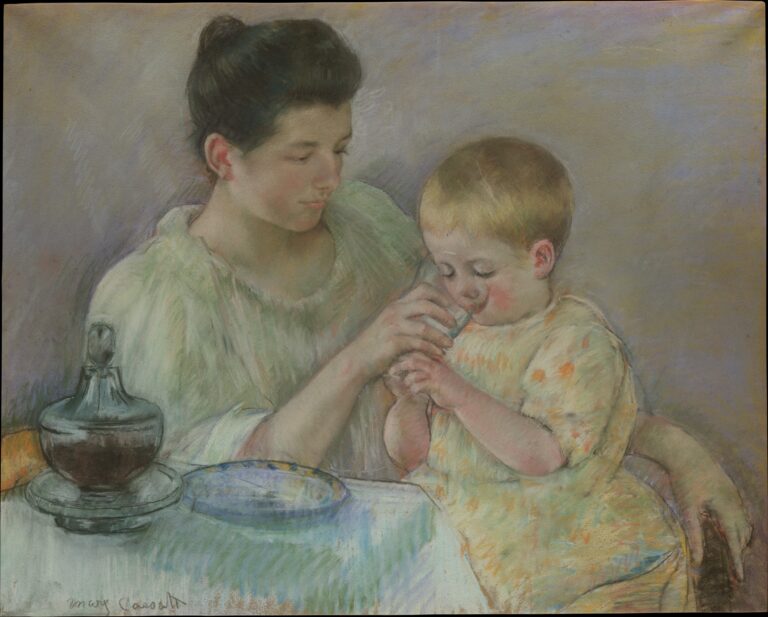
As Federici states, reproductive work is not only about giving birth but also all the other activities- caring, feeding, and even emotionally supporting. All these factors have a huge contribution to the physical and emotional well-being of society as a whole, and thus positively correlate to the capitalist system having sufficient sources of good-quality workers and consumers.
The data is here
The national and international accounts which measure economic growth such as GDP had excluded unpaid care and housework, even though the global value of unpaid work is estimated to be around $ 11 trillion. (Waring 1989-2020, Kisner 2021).
What is even more unsettling, the Italian feminist movement also prophesied and warned us about the impact such undervaluation may have on the future betterment of society, especially on the quality of life this may have for the most vulnerable groups.
Since the current system entrenches the construct of housework being a ‘women’s job’, it consequently also creates a ‘double burden’ on women who do enter the workforce (Federici 2008-2020).
So, despite the people who claim we entered postfeminist society with women being able to enter a workforce together with men and compete with them, is in fact not so evidently proved by data collected in all developed countries.
In fact, this double burden has been exacerbated by the neo-liberal strategies of austerity in the welfare sector that have become a common trend in the developed world since 1980, a trend which became even more prominent in the aftermath of the 2008 Financial Crisis (Oxfam 2022).
Subsequently, welfare services such as childcare services have become even more limited and, consequently, women have had to ‘fill the gaps’ created by austerity, forcing women to ‘lengthen their work day to the point of exhaustion and burnout’ (Federici 2008-2020).
According to the Oxfam report, in the UK alone there is a positive correlation between gradual cuts to public services resulting in women’s increasing unemployment due to the increase in unpaid care work. The same trend reflects itself globally where, due to the austerity exacerbated by the pandemic, 13 million fewer women being employed in 2021 (Oxfam 2022)
Ironically, the COVID-19 pandemic proved how exploitative housework and child-care duties are for women.
Before COVID-19, on average, women in OECD countries spent 2 hours per day more than men on unpaid work at home (Journal of Labour Economics 2019). For example, in the UK alone in 2018, men in the UK enjoyed 5 extra hours of free time than women (ONS 2018). For many men, home is still a place of relaxation, an ‘oasis’ to unwind from their job. For women, the reality is completely different.
With the breakout of the pandemic and the sudden transition to remote work, there was some hope that men would be more involved in the housework and caring duties Unfortunately, that was not the case. In fact, with the closures of schools and other educational-caring facilities, it was primarily women who took on these responsibilities, even in Iceland, a country labelled as a forerunner for gender equality ((Journal of Labour Economics 2019). Unsurprisingly, it led to alarming rates of burnout among women, mental and physical exhaustion, and an increased probability of women’s unemployment due to this increased workload (OECD 2021 UNICEF 2021).
This bleak reality, proved by data, seems to be invisible to some people who believe that we live in a postfeminist society and do not see the correlation between the above situation and the fact that such circumstances prevent women to gain top positions, even in positions considered feminine such as teaching or health-care.
According to the data, women only make up 16% of board members in the top 500 MNEs and only 8.8% of women are CEOs IN 20202 which slightly increased to 10% in January 2023 (OECD 2020). Even in professions that are considered feminine (such as health and teaching), men are twice more likely to be in higher-paid positions. For example, in teaching across the OECD countries 68% of lower secondary teachers are women but 55% of these schools are headed by men (Medium 2020)
It’s not a far-fetched statement that the austerity of neo-liberal capitalism through gender analysis could arguably be viewed as an institutionalised form of economic violence and abuse against female occupational and economic mobility. The data speaks for itself and yet little has been done by the governments.
Well that’s a topic for the next post

Hi, I’m Dominika, the sole author of this article. I created this space to connect my ideas and express my political and social commentary in the vast digital void. Here, my consciousness speaks through.