
I
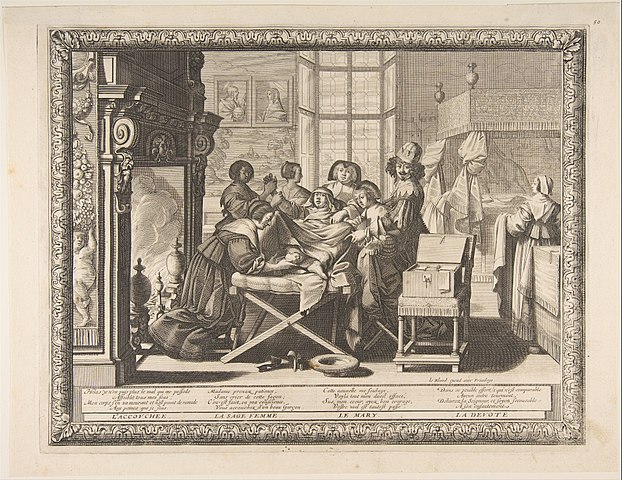
n our GCSE science classes, many of us learned about the groundbreaking work of Ignaz Semmelweis, an obstetrician from Hungary whose advocacy for handwashing to prevent childbirth infections revolutionized medical practice. Working at the Vienna General Hospital in the 19th century, Semmelweis observed shockingly high mortality rates among women giving birth under doctor supervision compared to those attended by midwives.
Shockingly, the mortality rate was so high in the doctor-run department that some women chose to give birth on the streets rather than in the hospital. Semmelweis’s dedication to uncovering the reasons behind these deaths revolutionized the field of medicine. He was among the few who genuinely cared about preventing the deaths of women during childbirth. Despite his evidence-backed theory, Semmelweis faced opposition from the predominantly male medical establishment, ultimately leading to his dismissal and tragic death.
Today, while handwashing has become standard practice, echoes of this resistance persist, particularly in the realm of women’s health. In the previous post, we explored how historical medicine often silenced women’s pain, and in this post, we’ll delve into the normalization and dismissal of women’s suffering, particularly in the context of medical research and the development of treatments for conditions like endometriosis, managing pain during childbirth or during menopause. Perhaps medicine, from its inception, was not intended to enhance the quality of life for the second half of the population. This post will also explore those conditions within the framework of class and race, which I believe are inseparable when speaking about the inequality within the medical field, but also when talking about pain, or rather who is allowed to experience pain or who isn’t according to the medical community. More specifically what kind of women are allowed to be taken under the so-called protection of medicine to treat their pain and what women aren’t?
You’re supposed be in pain- Childbirth
One American obstetrician, Charles Meigs, famously viewed pain during childbirth as a “most desirable, salutary, and conservative manifestation of life-force,” even seeing it as a God-ordained force that enabled women to love their children—a concept he termed the “Pain of Parturition”(Cleghorn 2021)
Meigs not only dismissed the use of anaesthesia but also denied that diseases like puerperal fever could be spread from patient to patient. He refused to adopt basic sanitation practices, arguing, “Doctors are gentlemen, and gentlemen’s hands are clean.” This attitude led him to treat multiple women with the same unwashed equipment, wearing the same soiled frock—a dangerous practice for which he became notorious (Aptowicz 2014, Nevins 2011)
The horror of childbirth is deeply embedded in society, reflected in casual conversations and popular culture, like the episode “The One with the Birthing Video” from Friends. For centuries, childbirth pain has been framed as divine punishment for Eve’s actions in the Garden of Eden. Obstetricians like Meigs perpetuated this belief, insisting that childbirth pain was necessary, while others, like James Young Simpson, pushed for pain relief. Simpson introduced the use of chloroform but reserved it for “civilized women”—upper to middle-class white women—while women of colour were left to suffer. (Cleghorn 2021). The racist assumption that Black women are resistant to pain still lingers today; in the UK, Black women are four times more likely to die during pregnancy and childbirth than white women, with many denied pain reliefs, such as epidurals, during labour (Birthrights 2023).
Before the 20th century, childbirth was the leading cause of death among women, more dangerous than cancer, heart disease, or infectious diseases (Cleghorn 2021). In response, German doctors Carl Gauss and Bernhardt Kronig developed “Twilight Sleep,” a method involving morphine and scopolamine to induce a semi-conscious state during childbirth. This method, popularized by Summer Boyd’s Painless Childbirth, was embraced by suffragists in New York’s upper-middle-class as liberation from unnecessary pain (Cleghorn 2021). However, the procedure transformed childbirth from a natural process into one requiring narcotization and medical intervention. After a woman died from haemorrhaging in 1915, Twilight Sleep’s popularity declined, though it continued among privileged groups, including the British Royal Family. Queen Elizabeth II reportedly used this method, as depicted in The Crown (Season 2, Episode 7), where she is shown asleep while doctors assist her delivery.
This history highlights the disparity in childbirth experiences. Women born into whiteness and privilege were spared from the pain of childbirth, a luxury not extended to others. Despite societal awareness of childbirth’s severity, effective pain management remains elusive. Stories abound of women being denied adequate relief, often receiving only paracetamol—akin to throwing a bucket of water on a wildfire. As one woman said, “Birth is painful, but it shouldn’t be traumatic” (Hinsliff 2023). Yet, for many women, it is.
The lack of research and investment in maternity care, particularly in pain management, remains a serious issue. This neglect may stem from disinterest in women’s health or a reluctance to experiment on women due to their “unpredictable” hormones—likely both. The thalidomide crisis had been an engrained excuse used by the medical community to stop including women in medical trials. Thalidomide a drug given to pregnant women for morning sickness caused severe birth defects and led to women being excluded from clinical trials until the 1990s. Rather than addressing the complexities of women’s health, the medical community chose to sideline women entirely. It raises the question: Is the issue one of inability, or a lack of will?
Menopause- ‘unspeakable alignments’
The transition from having regular periods to suddenly not having them at all is a dreaded thought for many women, and that is mainly because of the system we live in. Virginia Woolf’s famous novel ‘Mrs Dalloway’ sets is protagonist going through menopause, the sense of grief that comes with it, as menopause had been labelled as a ‘little death’ together with notion of being unspeakable subject ‘in polite company’. Woolf encapsulates the view of Menopause that had been well entrenched in our society, a condition categorised as a form of women personal failure, with the demise of fertility there comes a demise of a woman’s biological and social purpose- having children. Mrs Dalloway internalised this view, grieving for what had been lost to her, and comparing herself to old failing buildings in London.
This attitude persists in modern society, where youth and vitality are celebrated, leaving many women to fear aging because of societal perceptions. As women age, they are often viewed as losing their beauty and value, while older men receive preferential treatment and are frequently celebrated for their success, often paired with younger wives. It reflects a deep-seated notion that a woman’s worth is tied to her youth and her association with men.
While periods are not enjoyable, the cessation of them can be another nightmare. The physical symptoms accompanying menopause include hot flashes, insomnia, headaches (migraines), frequent UTIs, lower libido, vaginal dryness, and discomfort. Beyond physical symptoms, the psychological effects can be even more challenging, such as low mood, anxiety, and brain fog.
This transition stage can make life—and work—unbearable. One article describing menopause questioned the normalization of women’s suffering, highlighting that the medical establishment would likely be more responsive if men experienced such symptoms.
What also exacerbates the situation is the entrenched attitude within the medical professionals, making the dread of upcoming menopause who since mid-19th century categorised this stage of life for women are pathology. Doctors such as Blair-Bell in the 19th century claimed that women may experience such mood swings that it may transform to ‘full blown psychopathy’ and of course linked women’s sexual history to the level of pain that she would experience during menopause. In short, the more sexually active a woman was, then she would suffer the most ‘violent derangement’(Cleghorn 2021).
To this day, menopause is field of medicine that is largely ‘under-researched and misunderstood.’ As Cleghorn states in her book what makes the situation more frustrating that GPs often diagnose people with menopause only after periods had stopped for 12 months, meaning that other symptoms that menopause brings are largely dismissed and once again reduced to women ‘hysteria tendencies’ and are seen as larger symptom of depression or anxiety.
This understanding wasn’t always the case. In July 2002, the Women’s Health Initiative announced the adverse effects of hormone therapy, which had a detrimental impact on those seeking this treatment. The damage was primarily due to how the findings were delivered rather than the findings themselves. For instance, an interview with an epidemiologist on the ‘Today’ show exacerbated concerns by highlighting the excess risk of breast cancer, blood clots, and strokes. This caused widespread panic, leading many women to contact their gynaecologists, frightened, and requesting to stop hormone therapy (Dominus 2023).
The findings were also flawed, primarily based on health outcomes, with core research questions aimed at determining how many women ended up with strokes, heart attacks, or cancer. Such illnesses typically do not occur in women until their 70s or 80s, leading to an overrepresentation of women in their 60s in the study, while healthier women in their 50s who experienced intense menopause symptoms were underrepresented, and thus very unlikely to experience the above conditions (Dominus 2023).
Things may be changing for the better. The Equality and Human Rights Commission (EHRC) recently issued guidance to clarify the legal obligations of employers toward workers going through menopause. The EHRC emphasized that failing to make reasonable adjustments could violate the Equality Act 2010, exposing UK firms to legal consequences.
Fortunately, I work for a company that has embraced a new menopause policy, which includes an employee assistance program, a menopause support group, information on workplace adjustments, and even having menopause-focused Pilates sessions. Being part of these changes makes me hopeful, as we are finally addressing the health experiences of women and people with wombs. However, it’s hard not to think about how many women and people with wombs have suffered in silence for decades, hiding their pain and pushing through just to avoid being labelled as “dramatic.”
I am sorry we didn’t believe you- the far-reaching consequences of silenced pain and lack of medical research
The first time I encountered that sentiment – perhaps not from a medical professional, but from someone in my own life – I couldn’t help but wonder: ‘Is enduring pain just a part of being a woman? Am I expecting too much?’ And I’m likely not alone in this thought. The medical community, knowingly or not, has played a role in perpetuating this notion.
It’s no coincidence that the first medication for treating endometriosis is being released this year, or that menopause provisions have only recently been incorporated into law, requiring employers to make necessary adjustments in 2024. With the ongoing cuts to healthcare funding as part of austerity, I have little hope for further progress in maternity health. How can we expect advancements in pain management when, in the UK, approximately 65% of maternity units are deemed unsafe for childbirth? (Campbell 2024).
The recent Birth Trauma Inquiry revealed that around 4-5% of women will experience some form of post-traumatic stress following childbirth (Hugh James 2024). In May, I read a BBC article about a woman in Northampton who gave birth in a toilet after being dismissed by midwives. One midwife later apologised, saying, “I’m so sorry that I didn’t believe you.” This apology feels emblematic of the broader attitude within science and medicine toward women’s health—an attitude of disbelief and dismissal that persists to this day (BBC, 2024). Interestingly so this is how Cleghorn ends her book ‘Believe Us’.
By failing to take action to alleviate women’s suffering and improve their quality of life, they’ve allowed pain to become debilitating. It erects an impenetrable barrier, obstructing opportunities for career advancement, financial stability, cherished memories, and even the simple desire to start a family.
Watching a medical professional react to Gwyneth Paltrow’s business, Goop, made me realize how the scarcity of medical care and lack of research focused on women’s health issues can lead to capitalist marketing success in promoting expensive and ineffective, or even dangerous, health products. Brands like Goop capitalize on this medical gender gap because they know women’s health is not a priority in public health. For example, Goop sold a “Jade egg” for $66, claiming it could improve sexual health and prevent uterine prolapse. However, this product had no scientific backing and could lead to infections, including Toxic Shock Syndrome. Another infamous recommendation from Goop was “vagina steaming,” supposedly to cleanse the uterus and vagina. In reality, the vagina is self-cleaning, and such practices can increase the risk of bacterial growth, infections, and even burns.
Ultimately why are we then shocked that women reach out for these expensive treatments and equipment, yet what other choice do they have if the medical community ignores their pain? In fact, when women go to fancy women’s retreats or when it’s pointed out how many products women are perhaps using, and how much money they spend, they are laughed at or ridiculed, by men, who turn women genuine pain into laughable stock.
There was a viral TikTok where men commented, “Women are always unwell; if it’s not their periods, it’s their migraines.” What I love are the reactions from genuinely well-informed people and medical experts who highlight the gender bias and the gender gap in medical research when it comes to treating women’s pain and health issues, and hence why women are ‘always in state of pain.’
My final thought on unwell women? Well, women are not unwell out of the vacuum, medicine is not objective field, as much as we like to believe. Its progress or lack thereof is influenced by the oppressive structures of power which labelled women as a lesser sex. Cleghorn concludes her book with a powerful message to the medical community: believe women when they say they are in pain. Silencing and dismissing them can be deadly. The medical establishment needs to deeply reflect on its history—the attitudes and biases that have shaped its practices—and ask: Are we truly objective, or have we been complicit in advancing patriarchal and capitalist agendas? If so, how can we change this? Perhaps by listening to women, increasing the representation of women—especially those from diverse backgrounds—in the medical field and trials, and making research on women’s health a priority. These are just ideas, but they are ideas worth seriously considering—rather than reducing women or those with wombs to mere punchlines, treated as comic relief

Hi, I’m Dominika, the sole author of this article. I created this space to connect my ideas and express my political and social commentary in the vast digital void. Here, my consciousness speaks through.













Your writing has a way of resonating with me on a deep level. I appreciate the honesty and authenticity you bring to every post. Thank you for sharing your journey with us.