A
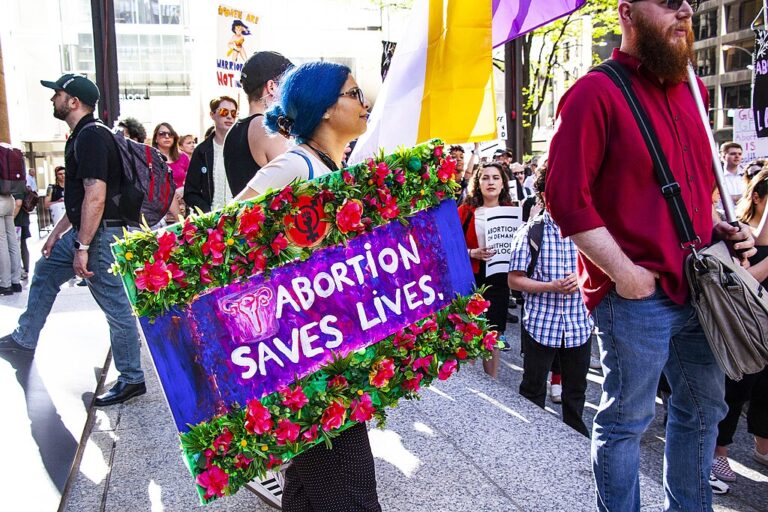
ccess to free and on-demand abortion is labelled as one of the most controversial topics for a conversation you can have anywhere. The debate on this medical and necessary practice had been divided between those who are either ‘pro-life’ or ‘pro-choice.’
I think once again the binary structure imposed by the patriarchal system is too simplistic and insufficient in explaining the complex realities that we live in. This binary also does not reflect what access to reproductive freedom means to people’s life’s.
I believe that access to free and on-demand abortion is pro-life as much as much is pro-choice. Saving people from unwanted pregnancies is a necessary, as well as normal medical procedure that saves lives. I also do not believe that those who oppose abortion on religious grounds are necessarily wrong, I respect their beliefs. However, I also believe that there must be a strong separation between state and religion, as it is inhumane to interfere with the choice of those with reproductive capabilities.
In Poland, the actual separation between the church and the state is very blurry, and I would even go as far as saying that it is non-existent. This conjoint existence between the state and the church became even worse since the Law and Justice Party (PIS) came to power in 2015.
The Catholic Church since the fall of communism in 1989 had called many political shots in the matters of public policy. Apart from influencing reproductive rights laws, Church also successfully lobbied for the introduction of compulsory Catholic Religious Education in state schools, as well as the presence of religious symbols in the public spheres.
However access to abortion after the fall of the Iron Curtain was a primary trade-off for the democratic opposition to obtain the support of the Church.
The trade-off of course reflected a political gamble rather than a popular opinion, as 70% of the Polish population supported access to legal abortion. In fact, the current statistics on Poles’ views in favour to make access to on-demand abortion legal are also estimated at around 70% (Oko Press 2022)
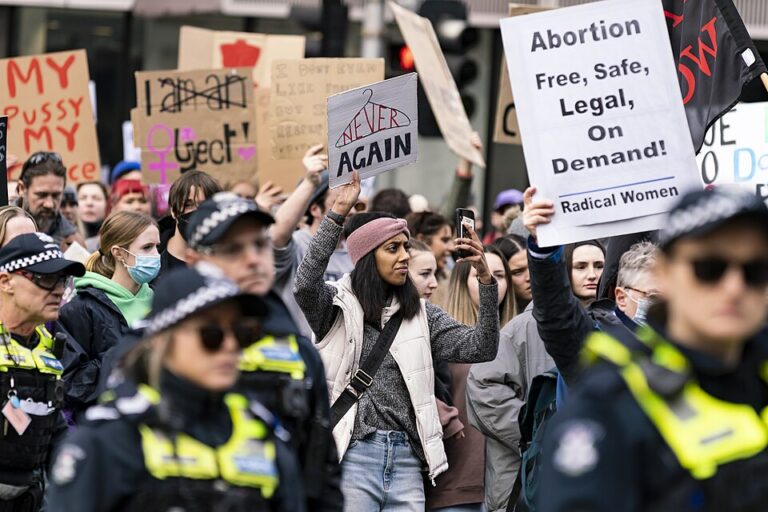
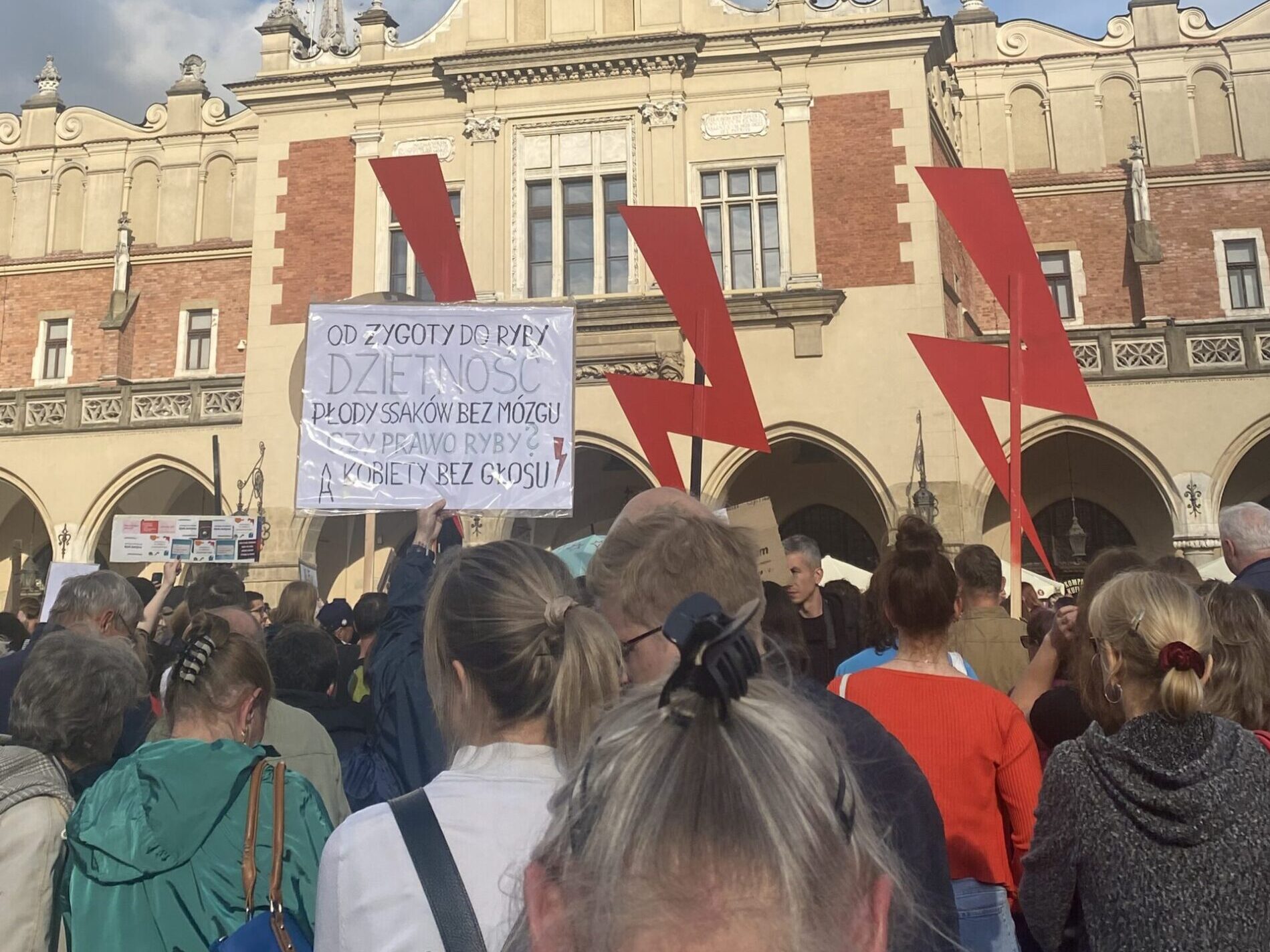
Officially in 1993 law known as ‘The Family Planning, Human Embryo Protection, and Conditions of Permissibility of Abortion’ was passed, a law which only allowed abortion to be performed only in the cases of rape, incest or when a pregnancy endangers the life of a pregnant woman, as well as in cases of foetal defects. However, the latter case was ruled unconstitutional by the Constitutional Tribunal on the 22nd of October 2020 (K 1/20) triggering nationwide protests.
The 1993 Act itself solidified the discourse framework of Catholic fundamentalism. The law contained sentences such as ‘conceived child’ while ‘pregnant women’ was replaced the phrase ‘mother of the conceived child’ (Szelewa 2016,). Ultimately, the Catholic dogma of life beginning at conception became an institutional reality and an ultimate obstacle to achieving reproductive freedoms in Poland.
The 2020 ruling had further implications, as it does not allow abortion in cases of extreme fetal defects, but correspondingly allows doctors to prioritize the foetus over the life of a person who carries a pregnancy. Doctors will simply refuse to perform abortions until the heartbeat of foetus stops. Thus, the recent restrictions created a freezing effect among Polish doctors (Strzyżyńska 2023).
Doctors in Poland are also able to cover their refusal to perform abotions even in an exception cases outlined in the 1933 law under conscientious objection. This objection allows them to legally avoid any punishments as they can refuse to perform this life-saving procedure on moral grounds.
The debate on reproductive rights and obligations of gynaecologists had become even tenser with yet further recent death of a woman; Dorota T. Dorota T. died on May 24th thus becoming yet another victim of institutonalised warfare against reproductive rights and gynecologists team refusal to perform abortion to save her life.
Dorota was admitted to the hospital due to the loss of amniotic fluid which under 22 weeks of pregnancy means that the delivery of a healthy and alive is non-existent. However, instead of saving her life, she has instead been advised by medical personnel to lie down and keep her legs up, assuring her that fluids will go back up. This medieval advice, of course, did not work, and Dorota died due to developed inflammation and septic shock.
Polish Gynecologists do not have the trust of their patients
What makes the situation worse is that recently exposed realities of Poland’s gynaecologists training very much questions not only their morale but also their professional capabilities and qualifications.
In short, the doctors in Poland do not even know how to perform abortion that is up to date with the guidelines of the World Health Organisation,
The WHO outlines that the current practice of abortion should be performed either through pharmacological drugs or through the use of transcervical procedures for terminating a pregnancy, including vacuum aspiration, and dilatation and evacuation. The methods outlined are considered the safest and most pain-free methods of terminating a pregnancy.
Here is the thing, the gynecological panel in Poland did not catch up with the modern age of scientific progress, as they continue to use a curettage procedure to perform an abortion.
The curettage is a procedure that involves scrapping and removing tissue from the inner lining of the uterus, is also highly invasive and also increases the risk of uterine bleeding and infection. This outdated method, that for years the WHO argues for its eradication and being replaced as mentioned here less invasive and by these safer methods.
What is even more infuriating is that doctors in Poland are not taught in medical schools to perform an abortion. Similarly in the USA, where schools do require students to complete a clerkship in obstetrics and gynecology, but there is ‘no mandate’ that it includes abortion education (Tanner 2022)
The UK is not perfect either when it comes to abortion provisions (as proven by the recent case of a woman who was imprisoned as she took prescribed abortion pills after the UK term limit) but in most cases the local GPs are qualified to perform it.
Gynecologists in Poland on the other hand, in fact instead of stand-by patient care and working without political affiliation, are often the ones reporting the law enforcement that a patient had a home abortion. Their judgmental and conservative attitude does not stop at snarky comments and so-called morality lectures at the gyno office. It goes as far as ‘snitching’ and some such as Bogda Chazan are even campaigning for stricter abortion laws.
Fear and demographic crisis- PIS counterproductive strategy
PIS thinks that by restricting reproductive rights they are able to preserve national identity which is based on the fictitious identity-based patriarchal-heternormative standards. Therefore these restrictions can be interpreted as their protection of Poland’s sovereignty against everything that is ‘foreign’ ‘liberal- cosmopolitan. ‘ The so called ‘sovereignty proetection’ ultimately ricochets on reproductive freedoms.
Here is another interpretation of PIS strategy- Poland is facing a dangerous demographic crisis. Poland is not only facing an increasingly aging population, but its population is also shrinking (Ptak 2023).
There are not enough young people, and PIS logic behind restricting abortion laws is their belief that such measure will improve the current demographic situation.
The strategy is counterproductive as so far as no real improvement had been noted to the current demographic state. In fact its proven to work in quie opposite direction.
In fact, the fear had been installed among those who can get pregnant and rightfully so because cases like Dorota are not one incident that happened since PIS took power with its warfare agenda against reproductive freedoms.
In 2021 a 30-year-old woman Izabel died in similar circumstances. Izabela even warned her mom that she may die as the doctor was refusing the abort the pregnancy as a result of the restrictions ruled by the tribunal. Izabela texted her mom saying; ‘”Thanks to the abortion law, there’s nothing they can do.” In December 2022 another woman Agnieszka was forced to carry a dead feoetus for a week, consequently developing septic shock that also resulted in her death.
The truth is the casualties due to the strict abortion that are officially counted and had been exposed to the public so far are 6, but there is a possibility there was more. What is also ironic is that these women already were mothers, and the children of these women became orphaned. As the ruling Party manifesto outlines the priority of preserving healthy and happy Polish families, it seems that these children deserved to have a family, and yet due to this draconian law woomen and people with wombs in Poland effectively face the danger of becoming incubators for the unborn as doctors would rather save the life of foetus than theirs.
I leave this article with an argument made by the Polish leftist oppositon MP.
‘Polish women are the second ethnic minority in the UK, with the highest fertility rate (ONS 2018)’
This makes you wonder why that is. Aside the better economic status in the UK, as a variable explaining this phenomenon, perhaps the lack of fear in the UK’s considered nonpartisan health care system (although nt ideal) could also be included in this equation.

Hi, I’m Dominika, the sole author of this article. I created this space to connect my ideas and express my political and social commentary in the vast digital void. Here, my consciousness speaks through.