R
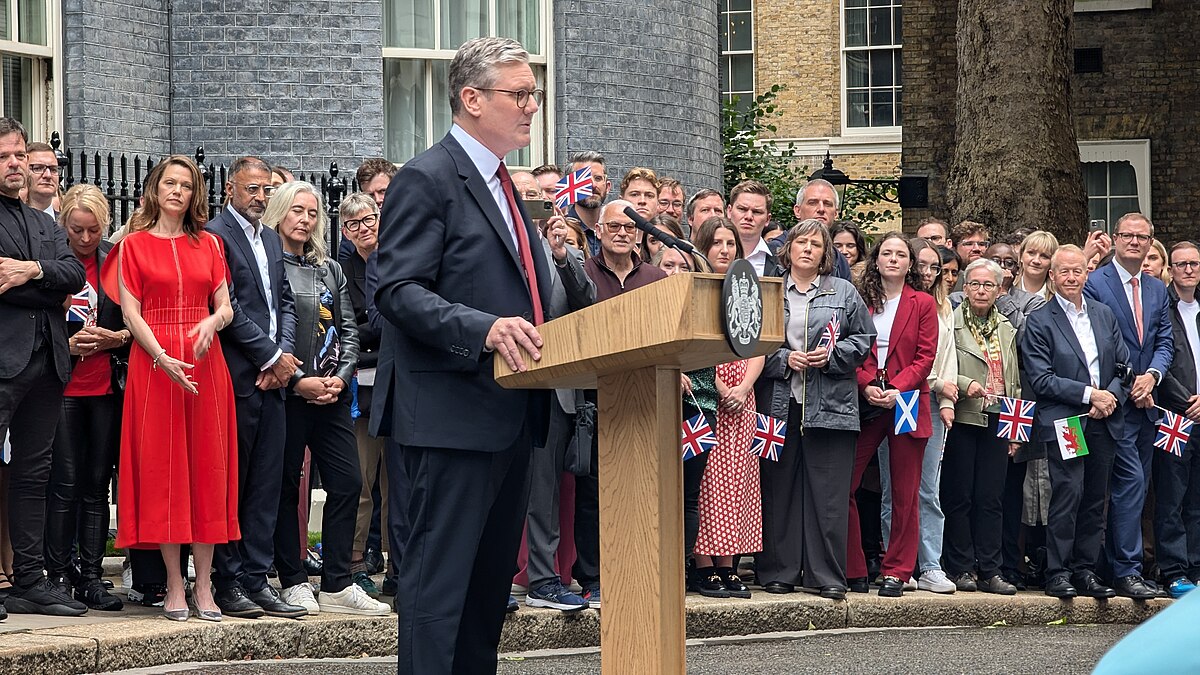
ishi Sunak announced a general election, ironically, for July 4th—the same date as American Independence Day. Whether this was intended as an irony, considering the Conservative Party’s slim chances of winning, is unknown.
The sense of irony speaks for itself, as the Labour Party won the general election with a majority of 172 seats. As someone unable to vote in parliamentary elections due to my lack of British citizenship, I was genuinely happy about the Labour victory. Finally, after 14 years of Conservative dominance, the political landscape is shifting. This period matches exactly the number of years since I moved to the UK.
While the Labour win signifies a change in British politics, I also felt a certain level of ambiguity. Many of my friends shared this sentiment. Was this vote for Labour, or simply an anti-Tory reaction against the events that have deteriorated the quality of life for many, especially young people?
In recent discussions about Labour’s win, a recurring pattern emerges: is Britain on the cusp of a new wave of hope for a better life? Even Sunak’s leaving speech made me wonder how much of this election is about disillusionment and resentment towards the Conservative government rather than actual support for Labour. His words, “I have heard your anger,” encapsulate this sentiment perfectly.
Keir Starmer himself does not have the public’s unwavering trust; we are waiting for him to prove he is right for the role, but uncertainty lingers (Stacey 2024). To illustrate Labour’s struggle to garner popular support: during the 2017 ‘snap election’ announced by then Tory Prime Minister Theresa May, Labour under Jeremy Corbyn achieved 40% voter support compared to the recent 35%. Labour also garnered 13 million votes in 2017, significantly more than the current 9.7 million (Hagopian 2024, BBC 2017). This discrepancy highlights my longstanding opinion that Keir Starmer may not be the ideal candidate to lead the only viable party capable of winning under the current First Past the Post electoral system, which entrenches a duopoly of power.
The statistics for this general election also speak volumes, reinforcing my mixed feelings. Labour secured fewer votes than in the last election, with 9.7 million compared to 10.3 million in 2019 (Hagopian 2024,). This decrease is primarily due to the lowest turnout in 20 years: 59.8%, the lowest since 2001, when it stood at 59.4% (Hagopian 2024,). Turnout was particularly low among young people, likely due to widespread disillusionment with the parties, including Labour, whose policies are either too vague or offer little improvement over recent years (Hagopian 2024,).
Labour is about to inherit a country in complete disarray with a huge national debt almost approaching 100% GDP and with 4.4% deficit (Smith 2024, Washington Post 2024). Its manifesto often falls short of providing clear solutions for improving public services, environmentalism, the cost of living, and the housing crisis. They all agree the state must become more active. Are we returning to big government in contrast to what the Tories had offered with their Big Society and small government approach for the past 14 years?
In this article, I will analyse the implications of Labour’s win and some of the promises made in their manifesto, with a particular focus on public services such as the NHS, education, and the domestic economy. These areas are not only the ones I feel most knowledgeable about but are also, in my view, the most interesting and relevant to the public’s concerns during this general election.
The Modern State of the NHS
“Boost” is an understatement of what public services need. Starmer himself stated that systems like the NHS and the prison system have been broken for a while: “I can’t pretend to fix everything overnight” (Pickard, Uddin, Hughes 2024). Let’s start with the NHS, a cornerstone of British pride. This institution, free and accessible to all regardless of socio-economic status, was established as part of the new dawn of the welfare state. Introduced by Labour Prime Minister Clement Attlee after World War II, it marked the beginning of a welfare state guided by Keynesian economics (Stewart 2008).
Recently, it has become well-known that the NHS is in crisis. The pride and joy of Britain is facing a chronic shortage of frontline workers, directly contributing to lengthy waiting lists. According to data, GPs and hospitals are spending a record £10.4 billion to fill this shortage (Campbell 2024)
The Labour Party manifesto aims to cut waiting times with 40,000 more appointments a week by increasing pay for staff as an incentive to work on weekends and evenings, expanding the NHS workforce with thousands more training hospitals, recruiting 8,500 more mental health staff, and creating a National Care Service to establish a minimum standard for social care, along with standardized pay and conditions for carers (BBC 2024).
However, further analysis reveals that Labour does not aim to raise any major taxes. They state that the money for these improvements will primarily come from cracking down on non-dom tax arrangements. Committing to spending less than £2 billion on healthcare and relying primarily on non-dom tax crackdowns is unlikely to suffice to truly return the NHS to its former efficiency (BBC 2024).
Labour counters that funding will derive from boosting economic growth, allowing more people to return to work, with increased investment in the energy sector as a primary source of employment. Additionally, they plan to improve apprenticeship schemes, boost technical skills, and convert Technical Excellence Colleges. Labour says it has been cautious, leaving unspent £2.5 billion of the revenue it expects to raise (BBC 2024).
Labour counters that funding will derive from boosting economic growth, allowing more people to return to work, with increased investment in the energy sector as a primary source of employment. Additionally, they plan to improve apprenticeship schemes, boost technical skills, and convert Technical Excellence Colleges. Labour says it has been cautious, leaving unspent £2.5 billion of the revenue it expects to raise.
Once again, pragmatism will dominate fiscal policies (BBC 2024, (Campbell 2024)) . However, what worries me about this plan is that boosting economic growth will take time. Building or investing in more green energy centres as a source of potential employment will take years and won’t solve the current consequences of long waiting times (BBC 2024, (Campbell 2024)).
These waiting times are exacerbated by staff shortages, which impact preventative healthcare and workforce availability. The NHS often detects diseases at critical stages due to its backlog, resulting in high costs for both the NHS and patients, and negatively affecting the national economy.
Relying on economic growth to fund the NHS will take too long and won’t address the current backlog. According to the Tony Blair Institute, 2.6 million people are out of work due to sickness, and 104.9 million working days are lost annually to long-term health conditions (The Tony Blair Institute 2023). The institute proposes using innovation and digitalization to speed up detection processes and create a regulatory framework for faster development and testing of new vaccines and therapeutics for preventable diseases. Additionally, establishing screening centres, as advised by an NHS consultant in the Guardian, could aid in early disease detection, reduce the burden on GPs, and cut costs for the national economy (Bloom 2023). The correlation is here, and waiting for economic growth to be the main source of funding will take ages and it will not be suitable to deal with the current backlog.
Furthermore, similarly to the teaching profession, more needs to be done to make careers in the NHS appealing. Efforts should focus on attracting people to consider NHS frontline work as a viable and economically sustainable career choice, especially given the rising cost of living.
Public education aided by private school taxes
Education just as NHS had been facing serious issues of understaffing and thus is in desperate need of a ‘boost.’ One of the most notable points in the Labour manifesto is their plan to add a 20% VAT to private school fees to fund an additional 6,500 teachers in England’s state-run schools. However, I am sceptical that this measure alone will provide sufficient funding (The Conversation 2024, BBC 2024)
Only 7% of UK children, which translates to around 615,000 out of approximately 8.8 million school-age kids, attend private schools. The average annual fee for private schools is about £15,000. Applying a 20% VAT to this amount would generate approximately £3,000 per student per year. Multiplying this by the number of private school students results in an estimated revenue of approximately of £1.8 billion. Labour claims this tax would raise around £1.5 billion, but there is little detail on how exactly this extra revenue will be used.
Increasing wages seems like the best option, considering that experienced teachers’ pay has fallen 12% in real terms since 2010 (The Conversation 2024). The incentive of collecting extra cash is necessary to boost the morale of public schools, but it is unlikely to be sufficient or sustainable for achieving long-term objectives. The teaching profession suffers from a significant lack of appeal due to insufficient compensation. To address this, wages for teachers in public schools must be increased, and the burden of excessive workloads should be alleviated.
A comprehensive program is needed to make teaching an appealing profession for young people and to retain current staff, who are leaving the profession at an alarming rate. Labour mentions investigating better bursaries for aspiring teachers, but a significant pay increase, along with an employee benefits package extending beyond a simple paycheck, must be a priority for the new government if they genuinely consider economic growth their top mission for Britain.
Green Power to the Rescue: Plan for the Domestic Economy
One of the most striking promises from Labour is their focus on economic growth through the expansion of green energy and cooperation between the public and private sectors, a vision championed by Rachel Reeves, the first female Chancellor of the Exchequer.
This approach, called the Green Prosperity Plan, aims to invest in green energy through a partnership with businesses via the National Wealth Fund. A key objective is to establish the Great British Energy company with an investment of £1.7 billion. This initiative is designed to boost the production of renewables and nuclear power, creating 650,000 jobs by 2030 (Labour Manifesto 2024, BBC 2024).
Reeves has suggested that merging investor funds into a state apparatus could catalyse private investment in new and growing industries. This model is inspired by Norway’s approach, which set up a $1.6 trillion fund that invested domestic oil and gas proceeds into technology stocks, generating significant returns (Clark 2024).
This ambitious project aims not only to accelerate the adoption of green energy but also to lower energy bills for UK households through a single national energy company. Additionally, it seeks to ensure British energy independence, a crucial issue highlighted by the Russian invasion of Ukraine, which exposed the vulnerabilities of relying on Russian energy (Labour Manifesto 2024).
Labour also plans to incentivize the development of environmentally friendly companies through proposed rewards for clean energy developers. The British Jobs Bonus could provide up to £500 million per year starting in 2026 for firms that create good jobs and build supply chains within UK coastal areas and energy communities (Labour Manifesto 2024).
Some economists are concerned that such a focus on increasing domestic energy production might lead to intense protectionism (Nelson 2024). However, I believe that many share my opinion that energy bills have become a significant burden for households with limited economic leverage. Furthermore, the current environmental damage is already affecting the quality of life for many and threatens future generations.
My primary concern is Labour’s plan to rely solely on green economic growth as the main source of financing public institutions. These institutions are currently in crisis due to prolonged austerity, and we are approaching inevitable damage. Moreover, Labour is about to inherit an economy burdened with huge national debt. Unlike Norway, which had substantial state wealth to invest in a similar fund, Britain will need to rely on further borrowing to finance this initiative (Clark 2024, BBC 2024)
As Danny Sriskandarajah, chief executive of the New Economics Foundation stated:
“If you want to shift the needle on poverty or inequality or green investment or crumbling public services, you’re going to have to find either new money or redistribute money in far more ambitious ways” (Nelson 2024)
Hope for a Touch of Feminist Economics
Another key policy in Labour’s plan is the expansion of childcare, the introduction of free breakfasts at every primary school, a ban on ‘zero-hour contracts,’ and establishing a ‘real minimum wage’ that considers the cost of living.
The expansion of childcare is crucial, especially if we aim to boost economic growth and achieve economic equity across gender lines. The lack of adequate childcare prevents women from fully participating in the national economy, and it’s well-proven that gender inclusion has an enormous positive effect on the domestic economy. This is particularly true for creating the ‘fiscal sustainability of the welfare state,’ which Labour aims to achieve (Buterin, Fajdetić, Funarić 2023).
One key issue with childcare in the UK is its implementation by local councils. Jeremy Hunt, a recent former Chancellor, announced free childcare as part of the Spring Budget Announcement (Topping 2024). While the idea of free childcare is well-received, considering that the UK is constantly labelled in Europe with the highest cost of childcare, its practical execution poses challenges (Standard 2023). The hourly rate set by the government does not meet the actual costs, and in many cases, since the money is distributed directly by the council, nurseries may receive even less than the established sums (Topping 2024, Perez 2017).
Labour aims to address this by expanding to 3,000 primary-based nurseries and making breakfast available across primary schools. Additionally, funds need to be reinvested to provide an adequate rate for childminders to encourage retention and to establish a better regulatory framework for councils to ensure proper distribution of funds (Labour Manifesto 2024).
The last thing I want to touch on is the abolishment of ‘zero-hour contracts,’ which for many in the UK have been seen as a tool to exploit basic employment rights (Labour Manifesto 2024).
Interestingly, the majority of those on zero-hour contracts are women, and Black and ethnic minorities are three times more likely to be on these types of employment arrangements. These contracts, alongside self-employment and other forms of precarious employment (which are also dominated by women), often mean that employees are denied basic employment rights (Klair 2023).
This includes restricted ability to pay either National Insurance or private pensions contributions or seek maternity leave (Women’s Budget Group 2020). The consequences are already evident; not only are women twice as likely to miss out on automatic enrolment for pensions (with the current threshold at £10,000, a figure Labour’s manifesto does not mention changing), but there is also an enormous pension gap between men and women (Wearden 2023). Furthermore, working multiple jobs, an employment path often pursued primarily by women, does not contribute to pension accumulation (Perez 2017, Women’s Budget Group 2020, Merrit 2024).
There is only so much Labour can include in their manifesto, but studies have found that lowering or eliminating the so-called auto-enrolment threshold could potentially improve retirement outcomes for nearly 3 million people (Pension and Lifetime Association 2023). Not to mention, the current pension policies contribute to women’s impoverishment. Studies, such as the Scottish Widows Women and Retirement report, showcase that at the current speed, the average woman will only receive a £12k pension compared to her male counterpart’s £19k (Leiper 2024).
Structural constraints are in place, and Labour needs to address them seriously. Policies on childcare must be accompanied by changes in employment laws. They cannot work in isolation. My hope is that having a female Chancellor of the Exchequer will finally bring the touch of feminist economics that this current economic system has missed, which has kept female economic inclusion at bay.
Concluding Thoughts
I have aimed to provide a thorough analysis, supported by evidence and personal insights, on beneficial policy considerations. While this article is lengthy, addressing the comprehensive changes needed in public services and employment laws to rectify the economic disarray Labour must tackle is necessary. I realize I haven’t touched upon housing issues or the reliance on food banks. Still, perhaps that can be the focus of a future post, as these are also important priorities and concerns for the British public, including myself.
It seems many voted for Labour more out of growing resentment toward the Conservative Party rather than genuine enthusiasm for Labour’s platform. Apart from concerns about the feasibility of their economic plan, there are also worries that Labour, given the significant win for the Reform Party led by Nigel Farage, may adopt anti-immigrant rhetoric to appease opposition sentiments. This concern is partly fuelled by Keir Starmer’s thank-you message to The Sun for their support, a media outlet known for its racist and xenophobic attitudes. Although Starmer quickly scrapped the controversial Rwanda scheme, fears persist due to Labour’s ongoing statements about ensuring “secure borders.”
Starmer’s popularity remains questionable, particularly among the British Muslim population, due to his neutral stance on Gaza and Benjamin Netanyahu’s continued warfare. However, Starmer recently surprised many by calling on Netanyahu to demand an immediate ceasefire, suggesting he may act more progressively than anticipated.
Additionally, the excitement surrounding cabinet members from working-class backgrounds, some of whom were on free school meals, brings hope. Their relatable perspectives might help shape a more equitable Britain and narrow the growing gap between the ‘haves’ and ‘have-nots’. Similarly, having a female Chancellor of the Exchequer could finally welcome a gender perspective on Labour’s plan for economic growth.
The fight for a better Britain—with improved working conditions, quality of life, and public services—does not end with Labour’s victory. Activism must continue, and it remains crucial for the British public to hold Labour accountable, especially as they present themselves as different from the Conservatives.

Hi, I’m Dominika, the sole author of this article. I created this space to connect my ideas and express my political and social commentary in the vast digital void. Here, my consciousness speaks through.