This is just a preview of the full article.
To read the complete piece, visit my Substack:
👉 Read the full article here
W
hen I began writing this essay, I didn’t know where it would lead. I wanted to explore the constant battle women face—and how, in Polish national discourse, women’s rights are often treated as trivial, unpatriotic, even unnecessary.
While building the timeline for Women’s Fight Back, which we’re publishing in September, I found myself navigating a maze of archival gaps and historical silences. Researching early feminist activism before World War I felt like chasing shadows. The effort required just to uncover names, events, and intentions was immense.
But as I unravelled the history, I began to see how deeply women’s activism was entwined with education, cultural preservation, and resistance. Under imperial repression, women sustained the Polish language, ran underground schools, and fought for literacy—yet their contributions were neither rewarded nor acknowledged by the men who later claimed the reins of power.
Coming from rural Poland, with a mother who was a teacher, I feel a personal tether—rightly or wrongly—to this lineage of women’s activism.
Growing up in a small town, feminism was conspicuously absent. It wasn’t part of classroom discussion, and it was entirely omitted from the national curriculum. When I moved to the UK, the contrast was stark: I was taught about suffragists and suffragettes. Feminism had a place in public memory. In Poland, it had been pushed into oblivion.
My only fleeting exposure to women’s history was a passing mention that Polish women gained the right to vote after World War I—around the same time Poland itself regained independence after 123 years of partition. I learned about that political rebirth in school, but the role of women in it? Ignored.
That silence wasn’t accidental. It reflects a broader erasure—one mirrored in the UK’s failure to seriously teach the histories of Black and Brown resistance to colonialism. In Poland, this erasure is tightly woven into nationalist narratives, which dismiss feminism as irrelevant—or worse, as a threat to national unity.
I often return to a quote I cited in my Master’s thesis on the Law and Justice Party’s rhetoric. Zygmunt Balicki, a key figure in the late 19th-century Endecja (National Democracy) movement, formed during Poland’s partition years (1772-1918) once proclaimed during a series of meetings in 1907, where women’s suffrage was raised:
“Women’s rights are not a national cause.”
For Endecja, national independence took precedence over liberation of any kind—especially for women. They clashed with leftist figures like Róża Luksemburg and Feliks Dzierżyński, who envisioned a more intersectional struggle rooted in class solidarity.
Despite its claim to represent the Polish people, Endecja’s ideology was steeped in antisemitism, classism, and chauvinism. They called for boycotts of Jewish artisans but offered no support for Polish ones (Wyrwa 2011). Their nationalism was hollow—demanding women’s loyalty without offering them liberation.
Why bring this up now? Because Poland’s interwar legacy still haunts its feminist movement. Today, that movement feels trapped in the second wave.
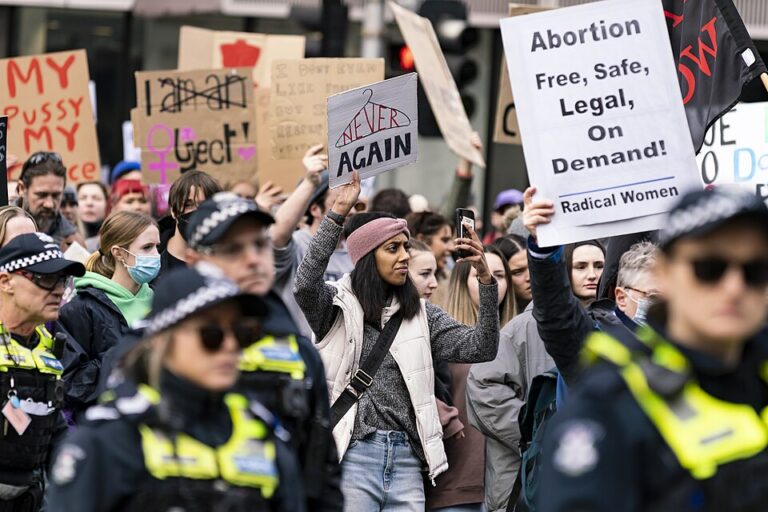
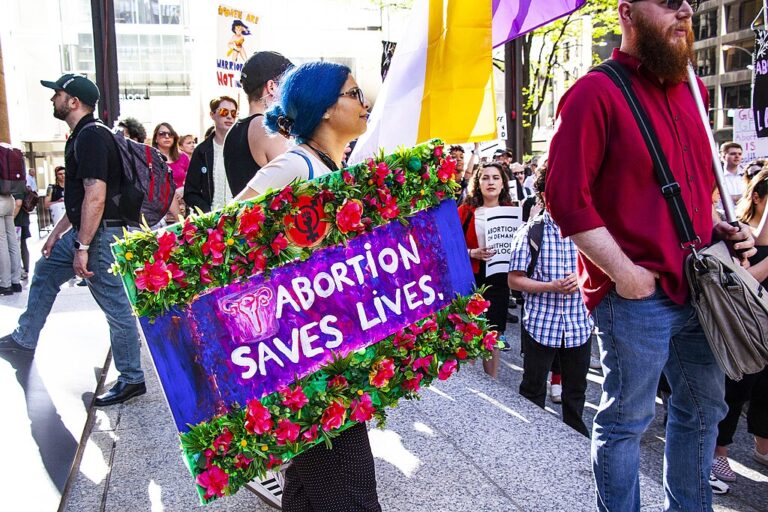
The 2020 ruling by the Constitutional Tribunal, which effectively outlawed abortion even in cases of foetal defects, marked a major regression. And despite the electoral victory of a centrist-liberal government, reproductive rights remain untouched—both legally and discursively.
Still, not all is frozen. In Warsaw, the opening of Abotak—a clever blend of abortion* and tak*(yes)—offers a glimpse of resistance. Though it doesn’t perform abortions, it provides accurate information and a safe space for people to take pills ordered online. Founded by the Abortion Dream Team, the clinic symbolises courage in the face of criminalisation.
Yet in 2021, Justyna Wydrzyńska, one of the group’s leading campaigners, became the first abortion rights activist in Poland to be convicted. Her crime? Helping a woman access abortion pills. The woman’s abusive partner found the pills—and reported her to police.
What followed was not just a legal tragedy, but a vivid illustration of patriarchal violence and state complicity.
As I rediscovered the names that shaped Poland’s feminist movement—Maria Dulębianka, a prominent artist and partner of the writer Maria Konopnicka—one quote stood out (Zakrzewski 2025). Dulębianka once asked:
“Does a woman stand outside her nation?”
Can the period before World War I fully explain the current state of women’s rights in Poland? No—but it provides the foundation, the symbolic framework, and the cultural narratives that nationalist and far-right movements continue to draw from, consciously or not.
Although I try not to fall into the trap of viewing the past as a fixed determinant of future outcomes—or imagining history as a linear progression—I can’t help, as a historian at heart, seeing patterns. There is a kind of symbiotic relationship between these movements and my own evolving attitude toward the country I come from. Digging into the past, and trying to perfect a timeline, I was perhaps seeking closure for what I saw as continuity—whether we like it or not—of women sacrificing themselves for a nation dictated by men who do not see our contributions as valid or worthy of acknowledgement.
These tropes about women’s place in society don’t disappear; they resurface, recycled and repurposed.
In many ways, the history of women’s rights in Poland can be summarised as a period of constant waiting—waiting for those in power to grant autonomy, to recognise women not as vessels of national reproduction, but as full citizens.
This essay is about those recurring narratives—how history isn’t just forgotten, but reshaped to serve power.
Nation Without a State and Men: Strong Women and the Foundations of Civil Society
The industrial era marked a period of profound transformation—not only in the structure of the economic system, but also in how individuals related to it. These seismic shifts disrupted existing social dynamics and prompted a series of pressing questions that coincided with the emergence of civil society. Among them, the “Woman Question” surfaced as a pivotal concern. Yet the eruption of feminist thought and suffrage movements in Poland took a markedly different shape compared to their counterparts in Western Europe and the United Kingdom.
In the Polish lands under partition, both men and women existed in a liminal state—citizens of empires that denied their national identity. Stripped of sovereignty, Poles were subjected to aggressive policies of Germanisation and Russification, forced to adopt the language of occupying powers and punished for preserving Polish culture or history. In regions controlled by Prussia and the Russian Empire, expressions of Polishness became acts of resistance.
The fight for national independence was met, unsurprisingly, with violent reprisals—after the uprisings of 1830–31 and 1863 in the Russian empire , Polish men were imprisoned, exiled, or forced to emigrate (Żarnowska 1996). This pattern of state repression repeated itself following the Russian Revolution of 1905–06, with working-class men again bearing the brunt of punitive measures (Żarnowska 1996). As industrialisation accelerated and political upheaval intensified, women increasingly took on the role of breadwinners.
However, it would be inaccurate to claim that women were absent from economic life prior to this. Rural women had long contributed through agricultural labour and other forms of unpaid work. Under partition, such labour took on heightened meaning—performing work was not only a means of survival, but a patriotic act tied to preserving family and national identity in defiance of imperial erasure.
For example, in parts of Poland under Prussia, 1906-07, school strikes took place in 468 school, of which 346 were Catholic.; many of which were attended by Poles. The strikes were triggered by the Prussian move to introduce religious education in German language to pupils whose knowledge of German language was still basic. And it was mothers who took a lead in those strikes (Żarnowska 1996).
This event epitomises the enduring myth of the “Polish Mother”—a figure who not only nurtures her children but also sustains Polish identity, language, and, in this case, Catholic tradition. The ideal of the Polish Mother is symbiotically linked to the concept of the “Strong Polish Woman,” popularised by writer Stefan Żeromski, who based a novel on the real-life activism of Faustyna Morzycka. Morzycka founded schools and focused on providing educational materials for children in rural areas. She co-founded the Women’s Rural Teaching Circle and became active in underground socialist organisations, particularly the Polish Socialist Party – Revolutionary Faction (Culture. PL)
Morzycka was not alone in using education as a tool to resist imperial encroachment and cultivate critical consciousness. Jadwiga Szczawińska played a pivotal role in this effort. In 1882, she founded the so-called “Flying University” and became a prominent advocate for women’s rights, with a particular emphasis on education.
Following the intensified Russification policies after the failed January Uprising of 1863, the educational system was heavily targeted. Russian became the official language of instruction, Polish literature and history were censored, and Polish authors were banned from curricula. In response, the Flying University developed its own programme of studies, holding lectures in private apartments and constantly shifting locations to evade tsarist raids—hence the name (Lukasik 1997)
Initially dubbed Uniwersytet babski (“chicks’ university”) due to its exclusively female student body (Lukasik 1997). However, the Flying University eventually admitted men. The early focus on women was partly due to the mass deportation of men to Siberia for their participation in uprisings, which left many women as primary breadwinners and caretakers (Lukasik 1997).
Its curriculum spanned four departments: social sciences, philology and history, pedagogy, and physical sciences. Among its most prominent alumni were Maria Skłodowska-Curie, the two-time Nobel Prize winner in Physics and Chemistry; Zofia Nałkowska, a leading socialist feminist; and Ludwik Krzywicki, a Marxist anthropologist, economist, and sociologist (Lukasik 1997, Angulo 2022).
Prior to the educational efforts spearheaded by the women mentioned above, it’s difficult not to feel a sense of disappointment at how the origins of the Polish feminist movement—particularly the loosely organised group known as the Entuzjastki (Enthusiasts), active in the 1850s—have been largely omitted from mainstream political discourse and historical scholarship. This omission is unsurprising, given that the core argument of this essay is the continued erasure of women’s history—an erasure I both identify and personally relate to.
The triumph of Polish nationalism, steeped in patriarchal and antisemitic currents, proved fatal to the feminist aspirations of the Entuzjastki. Their activism laid the groundwork for the Union of Equal Rights, which campaigned for women’s suffrage and legal equality (Zakrzewski 2025). Yet this legacy has been overshadowed by a nationalist narrative that positions women’s rights and national identity as mutually exclusive—a zero-sum opposition. Within this framework, women’s political agency is seen as antithetical to the nationalist project, even as women are expected to uphold it: figuratively, by producing future citizens, and metaphorically, by instilling loyalty to the nationalist vision.
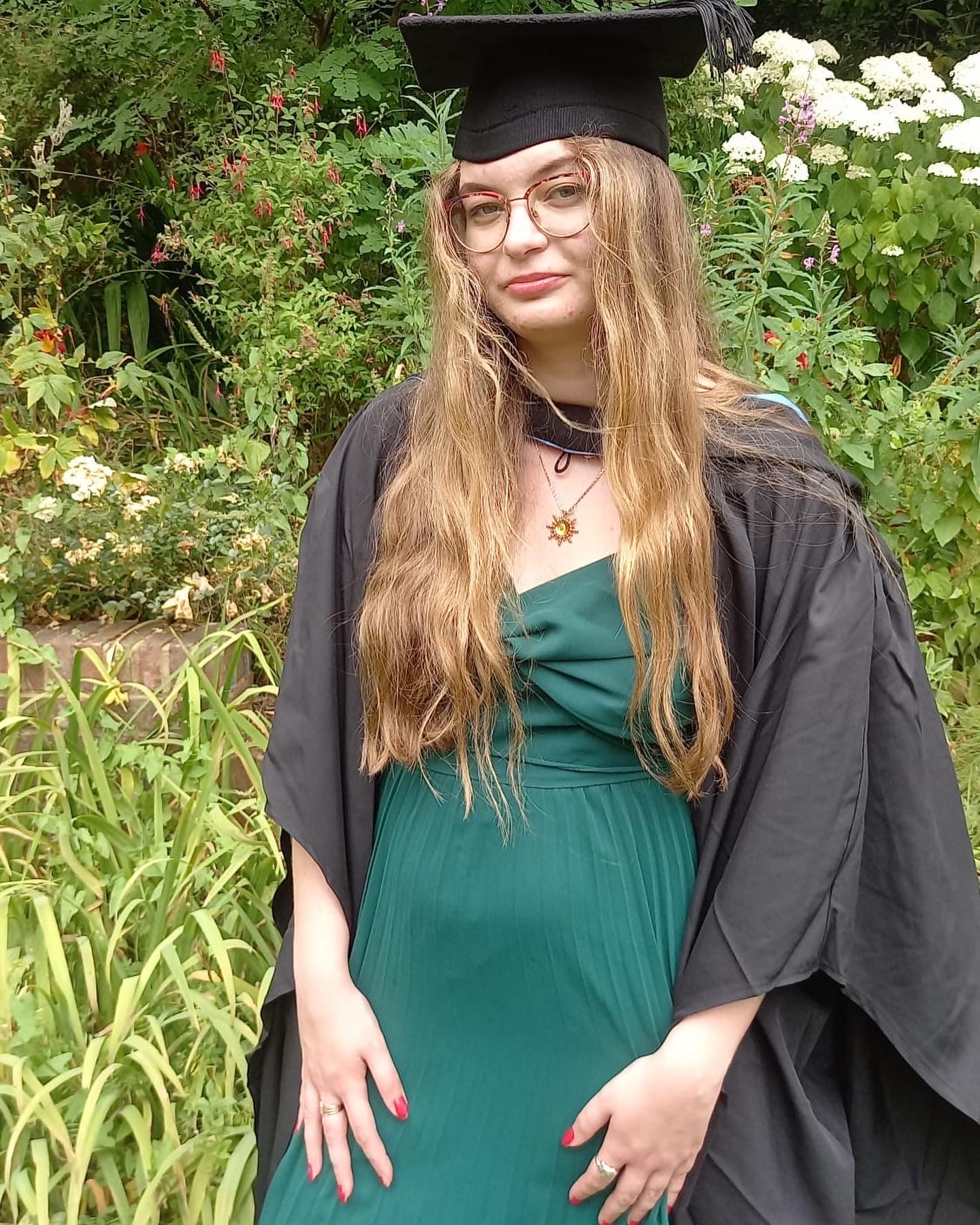
Hi, I’m Dominika, the sole author of this article. I created this space to connect my ideas and express my political and social commentary in the vast digital void. Here, my consciousness speaks through.