I
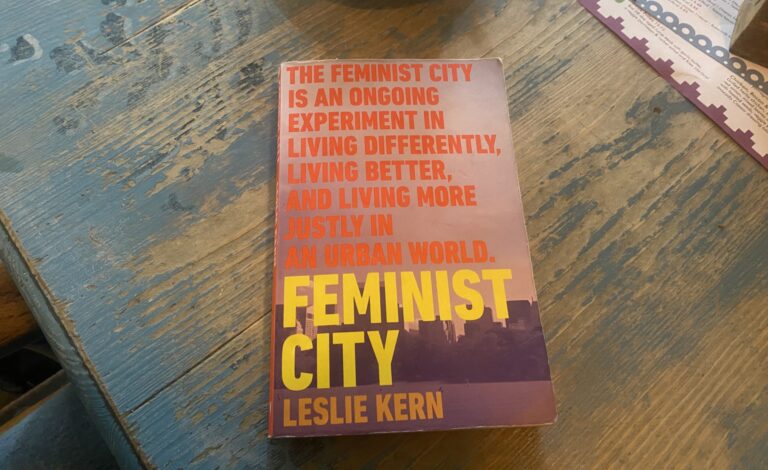
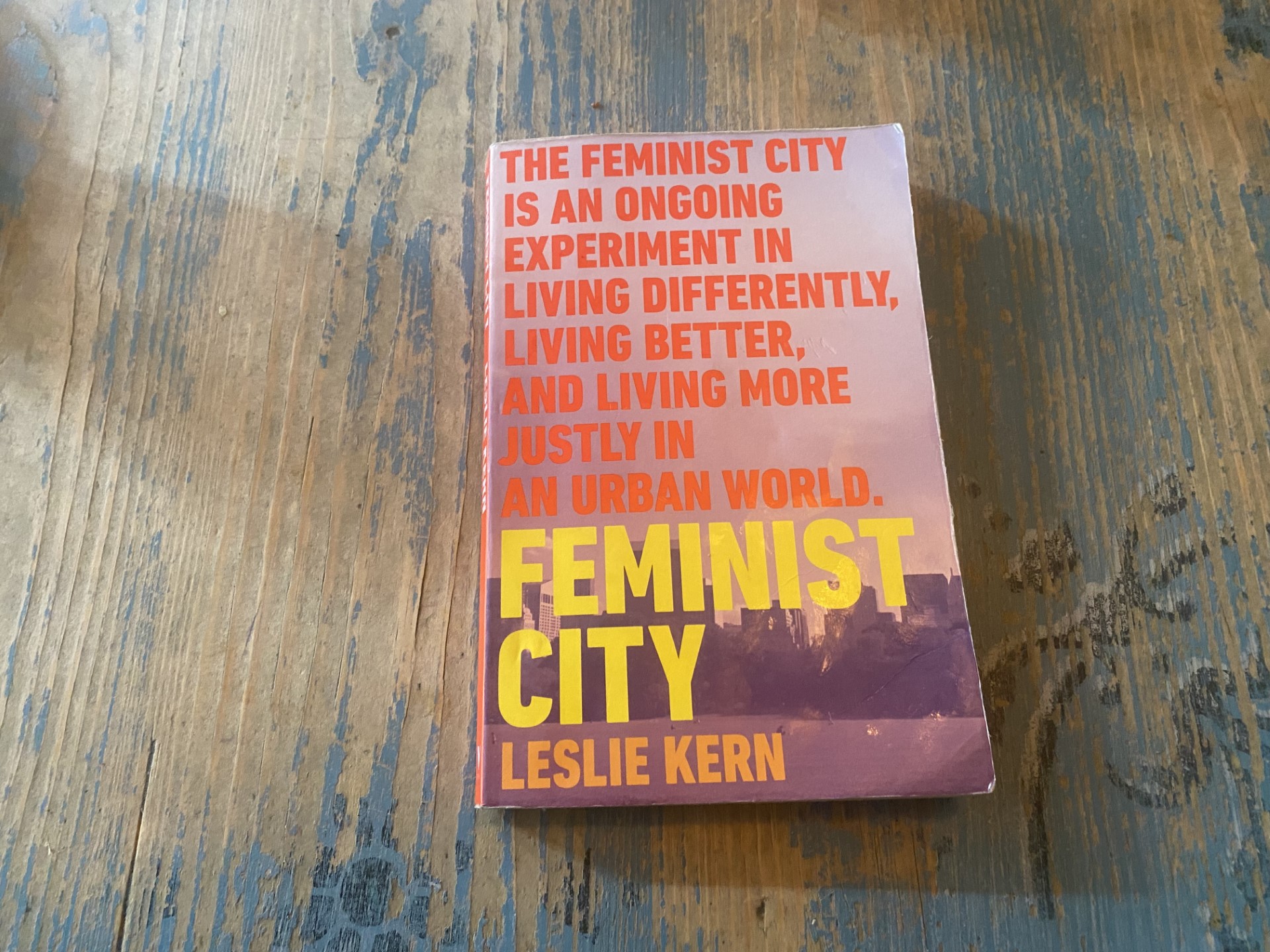
t is been some time since I shared the second part of my summer reading reflections on Kern’s ‘Feminist City’ and Perez’s ‘Invisible Women.’ My perfectionist and detail-oriented nature compelled me to ensure nothing was missed in my analysis, resulting in a rather lengthy five-page post.
Instead of splitting my post into two parts, I have decided to expand this summer reflection series into three parts. In this second installment, we will explore how cities serve as both havens of freedom and hubs of abuse, shedding light on institutions that play the dual role of protectors and abusers in urban settings.
The third part will delve deeper into the impact of gentrification and neoliberalism on women’s safety, revealing how these forces can both promote and encroach upon it. We will also examine how cities like Vienna and Glasgow are taking steps towards creating the future feminist cities. I will also conclude this series with my thoughts on achieving this utopian vision.
City place of freedom and fear
Living in the city has always represented a place of freedom and reinvention for me, dating back to my childhood. Perhaps this sentiment stems from my upbringing in a small town with a similarly small-town mentality, an experience that made me somewhat apprehensive about living anywhere else. There is something liberating about exploring yet-to-be-discovered places in your city, like a new local café or an art gallery, surrounded by strangers who do not know you, enjoying the independence of being on your own.
While such experiences might provoke anxiety in some, for me, I cannot imagine living anywhere else but in a city. Leslie Kern herself notes that cities offer women a unique venue for freedom, in stark contrast to the Victorian-era cultural norms that confined respectable women to the private sphere of their homes, away from the outskirts of the city.
Kern writes that cities provided opportunities for women that were simply unavailable in rural and small-town settings. The city became an escape from “parochial gender norms, heterosexual marriage, and motherhood,” a place of self-expression, social and political activism, the development of new friendships, and the foregrounding of existing ones (Kern 2019, p.12).
For women, city living symbolizes a rejection of the “suburban housewife model” perpetuated by the capitalist American dream. By choosing to live in the city, women reject conformity, repetition, and the stagnation that often accompanies suburban lifestyles. My move to Manchester and my solo travels mirror this experience for me, and I can’t stress enough how liberating it feels. It’s akin to the exhilaration I feel when I travel alone and explore new cities—an act of rejecting male guardianship, claiming my own space, and embracing the chaos of urban life. A quote from Kern’s book perfectly encapsulates my sentiments: “The pleasure of the city relies on its inherent unknowability and one’s courage in braving that unknowability” (Kern 2019, p.12).
This reflection reminds me of Rachel Green from Friends. Rachel literally flees from the prospect of becoming a suburban wife in Long Island, embracing the unknown and enigmatic dangers of New York City. She forms new kinships and rekindles her female friendship with Monica, which becomes her support system in her pursuit of independence. She steps out of the conformity that suburban life would have confined her to and eventually rises to become a successful executive in a well-known fashion brand. While I acknowledge that Friends simplifies this journey, we witness Rachel’s evolution in ways that might not have been possible had she remained in the comfortable, and dependent economically stable sphere of suburban existence.
While I write this, I, of course, acknowledge that a city is also a place of fear, and for women and marginalised communities such as people of colour and queer communities, this fear is gendered, racial, and sexual. The suburban lifestyle is safe and isolating, and cities, well they are also a source of all sorts of abuse.
This fear and abuse are multifaceted, entwined with gender, race, and sexuality. While the suburban lifestyle may offer safety and isolation, cities can be a source of various forms of abuse.
I cannot speak from the personal experiences of people of colour, but I acknowledge the heightened policing and the constant threat of verbal and physical abuse that lingers in the background of their daily lives. As Kern suggests, even the presence of a cisgender, middle-class white woman like me can create discomfort for Black individuals, people of color, and queer communities. This discomfort arises because society often prioritizes the safety of white women over the safety of those who do not fit this demographic
However, both Kern and I can acknowledge that the fear of sexual assault and harassment is a pervasive concern for all women. While it is true that these fears are not exclusive to city life and can occur in small towns, however, I do think that the urban environment presents unique challenges.
City of fear: Mental burden- yet financial too
For university students and women returning from work, the prospect of walking alone at night is a terrifying thought that occupies every woman’s mind. Unfortunately, this fear often takes root early, especially as girls go through puberty. Suddenly, their bodies change, and with those changes, they attract unwarranted attention – stares, whistles, comments, and touches they never asked for.
Your body is no longer yours- it becomes a property easily accessible in urban settings. Going through puberty is challenging and overwhelming enough when you have no control over how your body changes and its impact on you. Now, imagine experiencing this lack of control, only to undergo unwarranted attention as well. The violation itself is both traumatizing and, disturbingly, normalized and routine for many young girls.
Just recently BBC released an article indicating that ‘many teenage girls say they experience sexual harassment in their day-to-day lives and do not feel on the street alone’ and around 44% also said they do not feel safe while walking alone on the street. One fourteen-year-old girl says she has backup routes worked out for her walk home from school – should she need to use them – and that she is “constantly checking” who is behind her. (BBC 2023) The truth is she is not the only one who comes with such safety plans, ‘just in case’. This fear and mental plan are innate traits of being a girl and woman. It is so engrained within the very fabric of our socialisation, that we laugh it off because that fear is a constant part of our daily life.
What is even worse is that in a society where such behaviours are normalized and ignored, the burden falls on women to safeguard themselves and their bodies. It’s worth noting a striking realization that emerged as I read a sentence in a book: “Our actual fears weren’t particularly relevant; instead, we routinely engaged in acts of safety and precaution shaped by our gendered socialization” (Kern 2019, p.70).
This fear sends us a clear message that ‘we don’t belong in certain public spaces,’ and more than that this fear has more far-reaching consequences than just fearing walking in the dark. ‘It limits our choices about work and other economic opportunities, and what is perhaps an actual paradox dependent on men as protectors’(2019, pp. 147-148) Kern pointed out something obvious yet something I never really fully thought about, and that the lack of safety in urban spaces is not only a mental burden but directly financial one.
Kern makes you wonder how many work opportunities women turned down, because of the shift pattern and walking alone on winter night. How many night classes which would lead to a better qualification and thus better-paid jobs had been turned down by women?
Police and safety
After Sarah Everard’s murder, there was a significant shift in the public discourse surrounding women’s safety in urban spaces, particularly in the UK. I won’t delve into the specific details of Sarah Everard’s murder, as reiterating the brutality is unnecessary and can be psychologically distressing.
The fact that her murderer was a former metropolitan officer who abused his police powers to commit this heinous act sent shockwaves through the UK public. The stark truth is that the police, as an institution, are not inherently designed or equipped to ensure women’s safety. Recent reports have not only highlighted their inadequacies in understanding and addressing women’s safety but have also revealed a concerning number of police officers with a history of sexual misconduct.
According to The Guardian, “More than 1,500 police officers have been accused of violent offenses against women and girls over a six-month period, with less than 1% of them being dismissed” (Hall 2023).
It’s no coincidence that the former metropolitan officer had previously faced accusations of sexual assault that went unpunished, swept under the rug. Unfortunately, this systemic issue is something that those who don’t fit the cis white middle-class profile have long known. Regrettably, the police often perpetuate violence and abuse toward marginalized communities.
Additionally, it’s important to acknowledge the relative lack of public outrage and police investigation when victims of gender violence are women of colour and indigenous. Just a few months after the murder of Sarah Everard, Sabina Nessa, a woman of colour, was brutally killed while walking through Cator Park in London. Despite this tragedy, it received limited public exposure and didn’t elicit the same level of public outrage.
The movement of ‘Reclaim the Night,’ which began in the UK in 1997 in Leeds as a response to the ‘Yorkshire Ripper’ murders, reflects how institutions like the police have often responded to these dangers by instructing women to stay out of public spaces after dark. The first Reclaim the Night protests marches in 1977 were, in part, a response to the ‘Yorkshire Ripper’ murders and the police response that instructed women to avoid public spaces after dark, a response that tragically echoed after the murder of Sarah Everard.
Once again, this response reflects the sentiment expressed in the book: ‘Our actual fears weren’t particularly relevant; instead, we routinely engaged in acts of safety and precaution shaped by our gendered socialization’ (2019 p. 70). Ultimately, the dangers of urban spaces and the institutions that should ensure their safety converge in symbiosis, creating a city that is a place of fear. All these factors influence women’s existence in the city.
Criticism of excessive policing and the police’s inability to address the abuse experienced by women and marginalized communities, and in some cases, being implicated in that abuse, understandably erodes faith in the system and can leave us feeling hopeless about finding solutions. However, it’s essential to remember that just because a task is complex doesn’t mean it should be ignored or brushed aside as inconvenient. One potential path forward is to simply proactively listen to and collect data from the often-disadvantaged demographics affected by policing. This can be a crucial step in finding the necessary solutions to improve the current state of urban safety for everyone and not just the chosen few. In the end, we need uncomfortable conversations to find solutions to making a comfortable and safe urban environment.
Hi, I’m Dominika, the sole author of this article. I created this space to connect my ideas and express my political and social commentary in the vast digital void. Here, my consciousness speaks through.