I
ts been a while since I last wrote. For months, I struggled to find the energy or spirit to put pen to paper—or fingers to keyboard. The relentless news cycle weighed on me, not just with its cascade of bleak headlines, but with the growing disillusionment I felt toward the systems and parties that claim to fight for the underdog, yet often fall short. I even drafted a piece on the far right, but abandoned it midway—it felt redundant, like shouting into an echo chamber.
This article comes from a deeply personal place. It was sparked by a book we recently read in my feminist book club: Women Without Kids by Ruby Warrington. Billed as “a personal look + anthropological dig into the factors driving the global drop-off in the birth rate,” it explores themes that feel especially urgent and relevant.
At 25—still navigating the maze of career, identity, and personal choice—I found myself asking: does this book offer me new insight, or does it simply affirm what I already know, shaped by my upbringing and social values? Either way, something in it struck a chord. That’s what I want to unpack here, alongside reflections from Pink Pilled by Lois Shearing, which explores the presence of women in far-right spaces, with the tradwife trope as a central theme.
These ideas—about motherhood, feminism, and the cultural tension between “girlboss” ambition and traditional femininity—are often discussed in binary terms. But in reality, the narratives are far more complex. Exploring their intersections felt necessary. Too often, conversations around whether women should want children or should chase ambition flatten the nuances—and ignore the contradictions—shaping how we live, work, and define success today.
Do you have kids? Are you planning to have one?
These are the persistent questions that every woman faces. Asking them, in itself, is revolutionary, emancipatory, and liberating. After all, the fight for women to even have a choice in the matter has been central to feminist movements for decades, especially during the second wave of feminism.
That said, the debate about whether women can “have it all” while being mothers has been dissected, ridiculed, and passionately argued over, with people losing their composure regardless of the side they stand on. It strikes me as both ironic and amusing—no matter the perspective, the conversation revolves around women’s choices. Rarely are men’s choices debated in the same way, particularly when it comes to having children or whether they can “have it all” while pursuing fatherhood. And that’s the fundamental difference: there’s a distinction between pursuing fatherhood and being a father.
To me, fatherhood feels static, unchanging, and less scrutinised. One could argue that there is a distinction between motherhood and being a mom, yet the societal structures in which we exist make it impossible to separate the two. We often like to believe that parenthood takes something away from us, but it also rewards us in ways that cannot be ignored. However, the degree of freedom and autonomy granted within parenthood is unequal between motherhood and fatherhood.
This is why discussions persist on whether women should prioritise their careers or follow what is often termed their biological imperative. The mere existence of this choice disrupts deeply entrenched power structures, societal dynamics, and a status quo dominated by male authority.The field is unequal to begin with because we equate being a woman with being a mother; first and foremost. Being a man is just being a man, autonomous being whose choices are not up to debate, and whether he is good and attentive father is definitely not something we scrutinise to the same extent.
At 25, I’m still in the phase of figuring myself out. Questions about whether I want kids—or even if I already have one—seem to come up often. Even creating a dating profile forces you to confront this question, as it’s impossible to miss. Most of my thoughts revolve around whether my reluctance to have children comes from genuinely not wanting them, or if it’s rooted in something deeper. Perhaps it’s because I can’t imagine bringing a child into a world where, first, I can’t afford it, and second, I wouldn’t want them to face the same struggles I do. These days, working hard and doing well doesn’t guarantee a good life. Add to that the growing socio-economic inequalities and the looming threat of climate change, and I find myself asking: what’s the point?
You could argue that my apathy toward children stems from my childhood and being raised by a single mom, and perhaps you’d be right. But the truth is, nothing seems to have changed since my mother raised her kids. Fathers were often absent then, and I still see many fathers who are absent now, even while living under the same roof. Fathers often don’t know their children’s grades, hobbies, or interests. At best, they’re the “fun parent,” while mothers are portrayed as tired, demanding, or depressed.
Let’s move on to the tradwife trop, because let’s be honest, that is something that we will be discussing till the end of times, and something everyone will have a strong opinion on.
Tradwives
Just like the ongoing debate over whether women should have children, the rise of so-called “tradwives” feels deeply ironic to me. “Tradwife”—a portmanteau of “traditional” and “wife”—suggests a return to old-fashioned gender roles. But to me, it also reads as a trade: trading your independence, your agency, sometimes even your safety. And I’m not being overly dramatic, as we’ll see.
These women—who, let’s be honest, are predominantly white—argue that feminism has done more harm than good. They claim it has devalued motherhood and forgotten the importance of raising children. In their worldview, true happiness lies in being a stay-at-home mother while the husband provides. The father’s role, meanwhile, is reduced to a “weekend dad” who earns money and drops in now and then. I also would like to mention, the fact their idea of the glorious past as Laura Jane Bower argues is a ‘complete mythication’. Historical evidence overwhelmingly shows that women have been active participants in the labor market for centuries. Their construction of this nostalgic, mythical past is simply another tactic employed by far-right movements—perhaps an extension of the curated aesthetic that transcends mere social media content creation.
What’s ironic—and honestly, a little amusing—is that tradwives themselves are only possible because of feminism. The whole idea of choosing to stay home, and broadcasting that choice on YouTube or Instagram, is the result of decades of feminist struggle. Without feminism, there would be no platform, no economic freedom, and no voice to say “this is my choice.”
And let’s be honest: these women do work. They’re setting up cameras, editing videos, scripting content, and carefully curating aesthetic backdrops to market a lifestyle. Many tradwife influencers—most notably Girl Defined, run by sisters Bethany Baird and Kristen Clark—have monetized this image. They sell eBooks, online courses, and land brand partnerships, often earning more passive income than feminists like me. Bethany has even carved out a niche selling courses to help Christian couples “enjoy sex more” within marriage.
So, what’s the message here? That feminism is soul-crushing, but capitalism dressed up as sponsored homemaking is somehow liberating?
The contradiction is hard to ignore. They reject “girlboss” feminism (which, to be fair, I’m also critical of), yet embrace their own version of the hustle. It’s a little rich to preach dependence on a husband while making money from an audience you’ve told to opt out of financial independence
I also have questions for the men who romanticise this model: what happens if your wife stops agreeing with you? What if she no longer wants children? What if she stops being conventionally attractive? When I reviewed Pink Pilled by Lois Shearing, I was struck by her clear-eyed critique: the tradwife fantasy is deeply intertwined with white nationalism. It’s not just about gender roles—it’s about who gets to be seen as the “ideal woman” in service of preserving a racial and political order
Shearing also explores how many women leave the far-right. And often, what pushes them to leave isn’t their own suffering—its witnessing harm done to their children. That’s the conversation no one wants to have.
Because when we talk about tradwives versus girlbosses, we’re not just talking about lifestyle choices. We’re talking about survival. Financial independence isn’t about buying handbags—it’s about having the means to escape an unhappy or abusive relationship. In England and Wales, one in four women has experienced domestic abuse since age 16. On average, one woman a week is killed by a current or former partner (Refuge: Facts and Statistics).
Dependence on a man’s income means he also has the power to withdraw support. Bella Greenlea, who went viral for being a “stay-at-home girlfriend,” put it plainly in Cosmopolitan: “If you give a man the power to feed you, he also has the power to starve you.”
So, what happens when a tradwife ages and is no longer able—or willing—to reproduce? What happens when she stops conforming to the fantasy? Tia Levings, a former tradwife, has spoken openly about surviving emotional and physical abuse. She describes waking up one day and realising: there was “no bank account to turn to”(Flynn 2024).
We can laugh at tradwife content. We can ridicule it. But we also need to take it seriously. Because for many women—those without influencer money or a platform to escape from—it’s not a cute aesthetic. It’s, as Levings puts it, “a deliberate and strategic systematised denial of agency and options.” And now, it’s entering mainstream politics. JD Vance has floated the idea of denying women the right to vote. This isn’t fringe anymore. The so called ‘lifestyle’ is being championed directly from Washington now. (Flynn 2024).
And let’s not overlook the racial politics embedded in tradwife content—a portrayal of hyper-femininity shaped by white-centred ideals of womanhood. This ideal is defined by fair skin, middle-to-upper-class upbringings, and a thin, petite physique. But it goes beyond just aesthetics (Brower Laura Jane, 2024)
How many of these tradwives are Black or Brown? Very few.
White women enjoy the privilege of depending on a husband without scrutiny. Bower highlights how tradculture frames a “dependency problem” that often disregards the experiences of Black women, who do not share the same privilege of relying on men’s income. This is largely due to an economic system that perpetuates high levels of unemployment among Black men—many of whom do not earn enough to sustain a household (Brower Laura Jane, 2024). Additionally, many Black women serve as the heads of their households, further challenging the assumption that dependence on a male provider is universally accessible. The choice to stay at home and embrace the tradwife role may appear to be a personal decision, but it is deeply intertwined with the broader crisis of labor and care under neoliberal capitalism. As Bower points out, this choice remains a privilege largely confined to white, middle-class women (Brower Laura Jane, 2024).
Moreover, women of colour—especially Black women—are vilified for making the same choice. They are branded as “welfare queens,” accused of laziness, and punished for relying on state support (Shearing 2025)
So yes, tradwives are a lifestyle trend. But they’re also a symbol. A symbol of power, of privilege, and of a carefully curated illusion—one that erases the reality that many women don’t have the choice to “opt out” of working, let alone the safety net to escape when things go wrong.
The Illusion of Having It All
Ruby Warrington recalls a slogan that gained traction in the late 1970s—coincidentally, during the rise of second-wave feminism—and was later popularized by Helen Gurley Brown’s 1982 book Having It All: Love, Success, Sex, Money… Even If You’re Starting With Nothing. But the truth is, we don’t “have it all”—not in the way men do. As Warrington rightly points out, “love, success, sex, and money are things that men have been able to pursue freely precisely because they are not saddled with the responsibility of childcare.”
And the data supports this claim. Approximately 91% of women with children spend at least an hour per day on housework, compared to only 30% of men (European Insitute for Gender Equality 2021). Additionally, employed women dedicate an average of 2.3 hours daily to housework, whereas employed men spend around 1.6 hours. To emphasise this disparity even further, women who work full-time have, on average, 12% less free time than their male counterparts (Gender Equity Policy Institute 2024)
I think the COVID 19 also showcased the uneven distribution of housework and childcaring duties, with women suffering long term burn out.
So, while the dream of “having it all” promised empowerment, in reality, it left many women exhausted and disillusioned. Because “having it all” in this system means doing it all, all the time—and when you inevitably fall short, you feel like a failure at both work and motherhood.
The idea that only women are biologically or emotionally suited for caregiving is both outdated and incorrect. Research from Yale shows that stay-at-home fathers raise “vital and vigorous” children while also enhancing their own emotional intelligence and well-being. Shared parenting—where both parents are actively involved—has been consistently linked to stronger academic, emotional, and social outcomes for children. Additionally, studies have found that children of working mothers perform just as well as those whose mothers stay at home, with no adverse effects on their social or cognitive development due to early maternal employment.
It’s also important to recognise that heteronormative families are not the only ideal structure for raising children. These studies, among others, highlight that children’s development is nuanced and requires balance rather than a one-size-fits-all approach.
So when people argue that women should stay home for the sake of child development, I have to ask: what about fathers? Are they just there to provide financially and play on weekends?
Once again: when men say the tradwife model is ideal—ideal for whom?
Let’s talk about those men. On shows like Jubilee’s Middle Ground, they claim that mothers staying home is essential for children’s well-being. But who really benefits from that arrangement? The kids—or the men who get to preserve their autonomy, comfort, and career momentum?
The truth is, many of the people—mostly men—who champion this idea don’t seem especially concerned about children’s emotional development. What they want is for mothers, especially married ones, to absorb the full weight of domestic responsibility, quietly propping up a system that allows men to remain unburdened. But parenting requires sacrifice from both people. So, I have to wonder: what is it they actually care about?
Take Nigel Farage, who recently said, “Men make sacrifices many women don’t for top jobs”(Forsyth 2025). But what exactly are those “sacrifices”? Do these men even want children—or do they treat them like family heirlooms, something to pass down, without truly engaging in the messy, daily labour of raising them?
What Farage calls a “sacrifice” is actually the preservation of an old system: one where women are expected to take on the caregiving so men can chase ambition without interruption. Let’s be clear—they don’t want women to make those same sacrifices. Because if we did, it would mean dismantling the power structure that allows men more freedom. It would mean admitting that your autonomy exists because someone else is absorbing the unpaid labour behind the scenes.
If you can’t recognise that interdependence—that your so-called freedom is propped up by someone else’s sacrifice—then it’s no wonder you can’t imagine a world where women won’t simply fall in line with patriarchal ideals.
That said, yes, there are women who genuinely choose traditional lifestyles, and if that aligns with their values, I respect their choice. But let’s stop pretending that the men who advocate for “tradwives” do it out of deep concern for child development. Be honest: you’re defending a system built on , gendered labour, and racial hierarchy—a system that just happens to serve your thirst for power, comfort, and control.
The data highlights the sacrifices men are willing to make, while women—often behind the scenes—carry the burden, a dynamic commonly referred to as the “motherhood penalty.” Warrington underscores the wage gap between married women with children and married men, but this disparity is even starker when comparing women without children. Married mothers and single mothers earn approximately 75 cents and 54 cents, respectively, for every dollar earned by married men. Additionally, research indicates that single women without children have roughly the same wealth as single men (Fry 2024).
In her chapter Warrington also touches on the idea of women “having it all,” this phrase itself is flawed. First, because self-actualisation is deeply personal—everyone defines it differently, as illustrated by Maslow’s pyramid of needs. Second, because for women who have children, whether by choice or circumstance, their time, energy, and financial resources inevitably become centred on them. This challenge is particularly profound for women who seek different financial pathways and security—something I personally relate to.
When I reflect on the idea of “having it all” for women, I’m reminded of my favorite Grey’s Anatomy character: Cristina Yang. She was witty, sharp, and relentlessly pursued her dreams without ever compromising who she was. She even made the difficult decision to have an abortion—not because she didn’t value motherhood, but because she had no desire to “have it all” in the conventional sense. The show’s creator, Shonda Rhimes, once explained: “I gave her a strident desire not to have children because while I adore children, I wanted to watch her fight that feminist battle and win.” Cristina Yang was ahead of her time, and she still resonates deeply with ambitious women like me. She’s a powerful reminder that it’s entirely valid to dream of a life beyond a cradle and a wedding gown—that ambition doesn’t need to be tethered to domestic milestones in order to be meaningful.
This isn’t about resenting mothers or traditional families. Many women do find deep fulfillment and ambition in motherhood—and that’s valid. The issue is when society treats one path as universal, and one set of sacrifices as invisible.
What’s interesting about Maslow’s pyramid is that he acknowledged that basic needs—such as food, security, and freedom—must be met in order to achieve the highest level of human existence: self-actualization. However, in a world marked by growing economic inequality and relentless consumerism, it seems our nature is wired never to feel as though we have “enough.”
Even if I one day long for motherhood, I can’t help but ask: would the comfort I want for myself and my child come at the expense of someone else’s inequality—by outsourcing care work to women who are underpaid and undervalued?
Having children is an expensive endeavor, and in today’s world, financial stability is far from guaranteed. For some women, self-actualization may come through motherhood, but economic realities often make that path inaccessible. Research consistently shows that a woman’s financial standing tends to decline after having children, raising an important question: in a world where financial security is increasingly precarious, is bringing a child into it a responsible or even viable choice?
The truth is, we live in an increasingly unsustainable economy—where having children doesn’t just mean cutting back on luxuries; it often means a significant drop in one’s standard of living. Many young people today struggle to pay rent or find themselves living with their parents long into adulthood. The so-called “motherhood penalty” is real, and its impact disproportionately falls on women.
Women’s rejection of motherhood isn’t driven by anti-humanism or an obsession with “girlboss” culture—it’s often a matter of survival in a system that remains deeply inequitable. While financial independence is rising for single women, we refuse to accept less—whether from men who do not share in sacrifice or from an economic system that continues to undervalue care and labor. Perhaps my hopes for financial security and a fundamental restructuring of our relationships are idealistic. But for now, they remain the only vision I am willing to pursue before I could ever consider motherhood.
Concluding thoughts
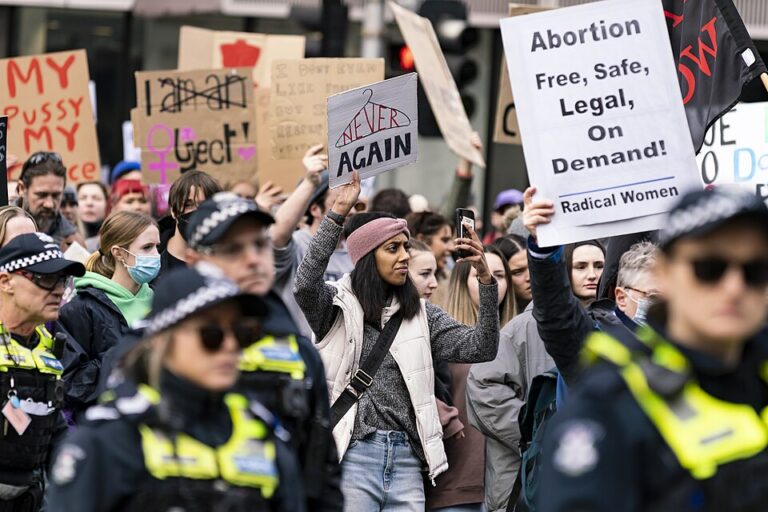
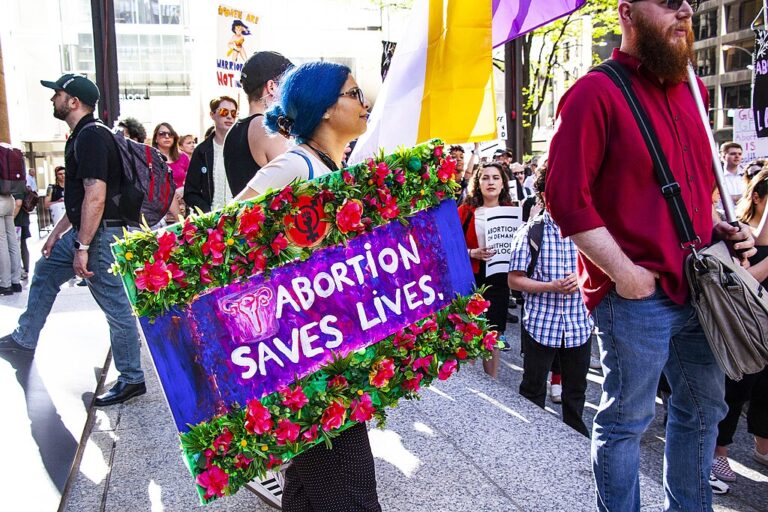
This review—or rather, these personal reflections that have been simmering in my mind over the past few months while reading Women Without Kids—is something I feel deeply about. I’ve connected Warrington’s insights with ideas from books like Pink Pilled, and I see the next part of this conversation unfolding through a focus on abortion, as explored in Warrington’s own story. I’ll also be drawing from Annie Ernaux’s Happening and The Years, which both offer striking and sobering perspectives on the realities of reproductive choice.
In that follow-up, I plan to explore the deeply personal and often traumatic experience of accessing abortion care, alongside the political urgency of organising for stronger reproductive rights in the UK.
Reading these books, I’ve been left with a kind of exhaustion—a weariness not just from the weight of possibility, but from the realization that we still haven’t asked the right questions. Why is the question of whether a woman wants children or not treated as a public concern, as a debate worth dissecting again and again?
Because, ultimately, it’s never just a question. It’s not just a philosophical thought experiment or an intellectual debate. It is a question that reveals two things:
First, women’s choices are never truly their own—not when those choices disrupt the foundations of how our world is structured. If the decision to have—or not have—children were truly private, we wouldn’t see the violent political backlash: from the overturning of Roe v. Wade to the growing global far-right that reduces femininity to reproduction.
Second, perhaps we haven’t yet dared to imagine a world that is genuinely child-friendly—or more accurately, one that is equitable, interdependent, and rooted in care rather than individualism, productivity, and profit.
We keep having the same conversations. And maybe I am just adding to the noise. But at the heart of all this, one thing remains true: my choices are mine—until the law decides otherwise.
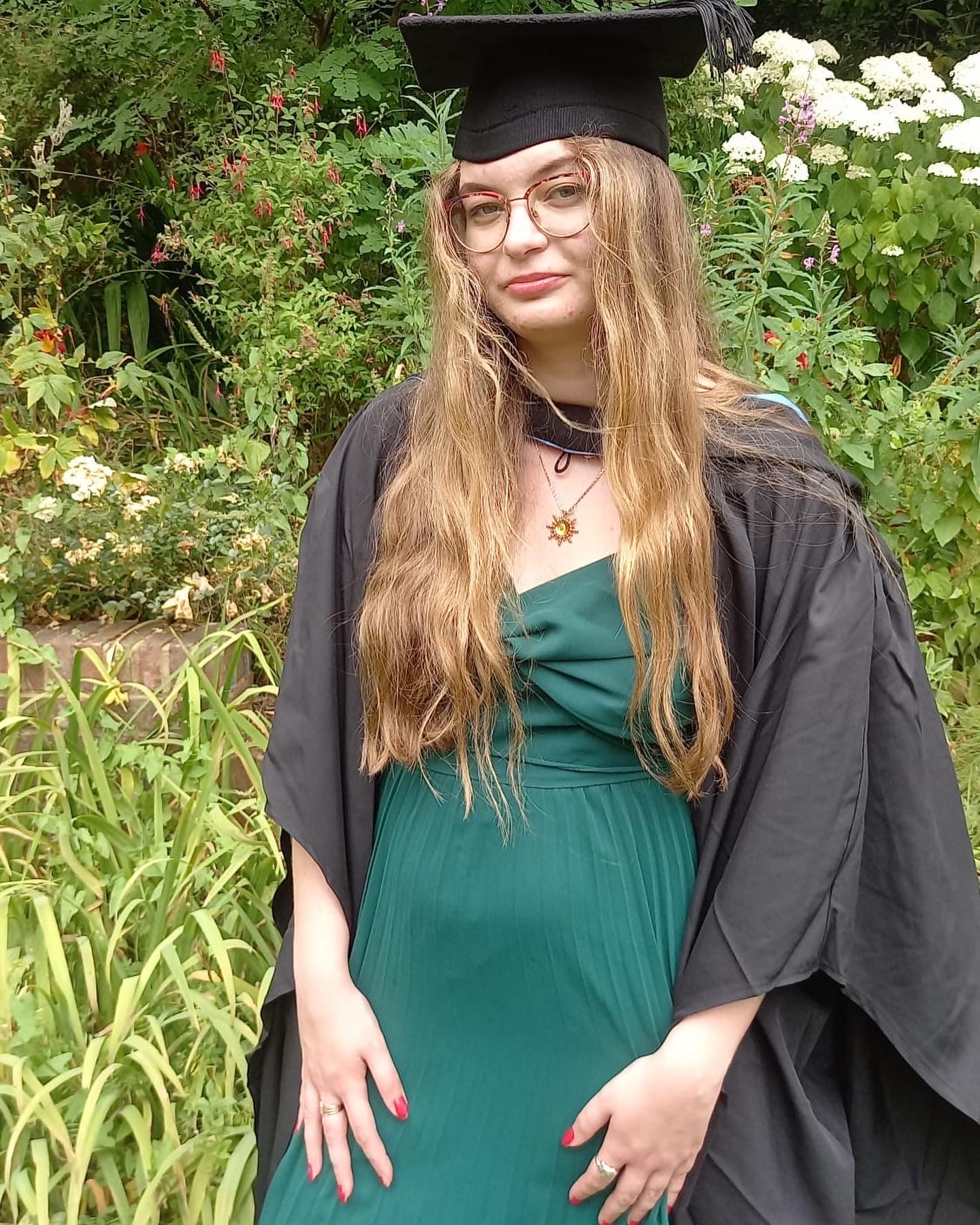
Hi, I’m Dominika, the sole author of this article. I created this space to connect my ideas and express my political and social commentary in the vast digital void. Here, my consciousness speaks through.